俞
| ||||||||
Translingual
Han character
俞 (Kangxi radical 9, 人+7, 9 strokes, cangjie input 人一月弓 (OMBN), four-corner 80221, composition ⿱亼刖)
Derived characters
References
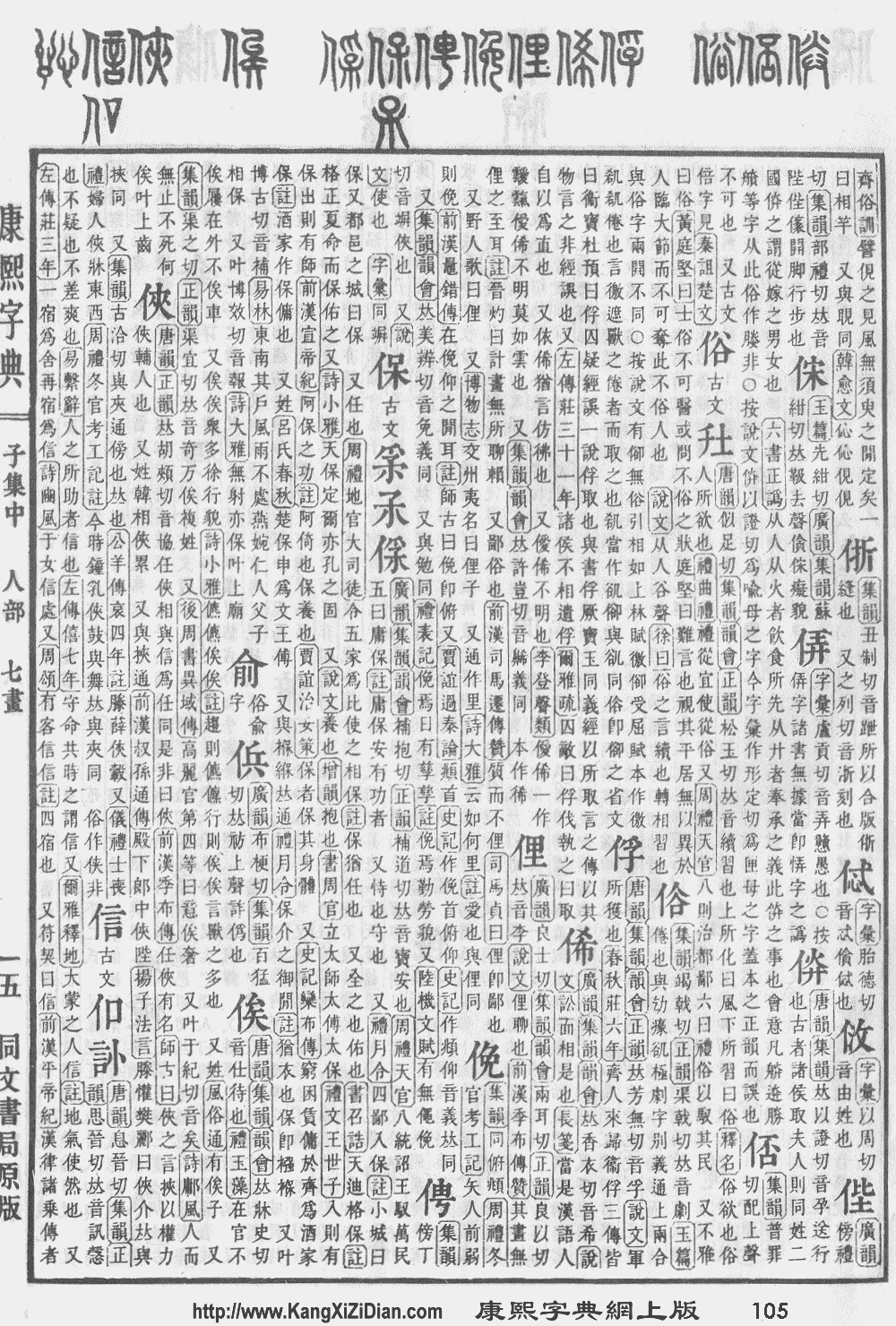
- Kangxi Dictionary: page 105, character 21
- Dai Kanwa Jiten: character 703
- Dae Jaweon: page 223, character 2
- Hanyu Da Zidian (first edition): volume 1, page 155, character 3
- Unihan data for U+4FDE
Chinese
| trad. | 俞/兪 | |
|---|---|---|
| simp. | 俞 | |
Glyph origin
| Historical forms of the character 俞 | ||||||||||||||||||||||
|---|---|---|---|---|---|---|---|---|---|---|---|---|---|---|---|---|---|---|---|---|---|---|
| Shang | Western Zhou | Shuowen Jiezi (compiled in Han) | Liushutong (compiled in Ming) | |||||||||||||||||||
| Oracle bone script | Bronze inscriptions | Small seal script | Transcribed ancient scripts | |||||||||||||||||||
 |
 |
 |
 | |||||||||||||||||||
|||
|
References: Mostly from Richard Sears' Chinese Etymology site (authorisation),
| ||||||||||||||||||||||


| Old Chinese | |
|---|---|
| 褕 | *low, *lo |
| 偷 | *l̥ʰoː |
| 媮 | *l̥ʰoː, *lo |
| 鍮 | *l̥ʰoː |
| 緰 | *l'oː, *slo |
| 牏 | *l'oː, *l'os, *lo |
| 揄 | *l'oː, *l'oːʔ, *lu, *lo |
| 窬 | *l'oː, *l'oːs, *lo |
| 歈 | *l'oː, *lo |
| 俞 | *l̥ʰus, *lo |
| 隃 | *slo, *hljo, *hljos, *lo |
| 毹 | *sro |
| 輸 | *hljo, *hljos |
| 鄃 | *hljo, *lo |
| 腧 | *hljos |
| 逾 | *lo |
| 榆 | *lo |
| 愉 | *lo |
| 渝 | *lo |
| 瑜 | *lo |
| 蕍 | *lo |
| 覦 | *lo, *los |
| 蝓 | *lo |
| 踰 | *lo |
| 崳 | *lo |
| 羭 | *lo |
| 堬 | *lo |
| 瘉 | *lo, *loʔ |
| 萮 | *lo |
| 騟 | *lo |
| 愈 | *loʔ |
| 貐 | *loʔ |
| 喻 | *los |
| 諭 | *los |
In oracle bone script, it was likely a phono-semantic compound (形聲/形声) : semantic 凡 + phonetic inverted 由 (OC *lɯw). It's also possible that the phonetic component is instead an ancient form of 鏃 (OC *ʔsoːɡ). In bronze inscriptions, 凡 corrupted into 舟, and the bottom-right subcomponent gradually corrupted into two lines (now written 刂). The upper-right subcomponent (亼) moved to the top of the character in bamboo slips, and 舟 was further corrupted into 月, arriving at the modern form.
Pronunciation 1
Definitions
俞
Compounds
- 伯俞泣杖
- 俞俞
- 俞允 (yúyǔn)
- 俞旨
- 俞然
- 俞跗
- 吁俞
- 吁咈都俞
- 呴俞
- 都俞吁咈
Pronunciation 2
Pronunciation 3
Pronunciation 4
Definitions
俞
Pronunciation 5
Definitions
俞
- Used in 俞兒/俞儿.
References
- (Min Nan) “Entry #41096”, in 臺灣閩南語常用詞辭典 [Dictionary of Frequently-Used Taiwan Minnan] (overall work in Mandarin and Hokkien), Ministry of Education, R.O.C., 2023.
Japanese
Kanji
- This term needs a translation to English. Please help out and add a translation, then remove the text
{{rfdef}}.
Korean
Hanja
俞 (eum 유 (yu))
- This term needs a translation to English. Please help out and add a translation, then remove the text
{{rfdef}}.
Vietnamese
Han character
俞: Hán Nôm readings: dũ
- This term needs a translation to English. Please help out and add a translation, then remove the text
{{rfdef}}.