唇
| ||||||||
Translingual
Han character
唇 (Kangxi radical 30, 口+7, 10 strokes, cangjie input 一女口 (MVR), four-corner 71603, composition ⿱辰口)
References
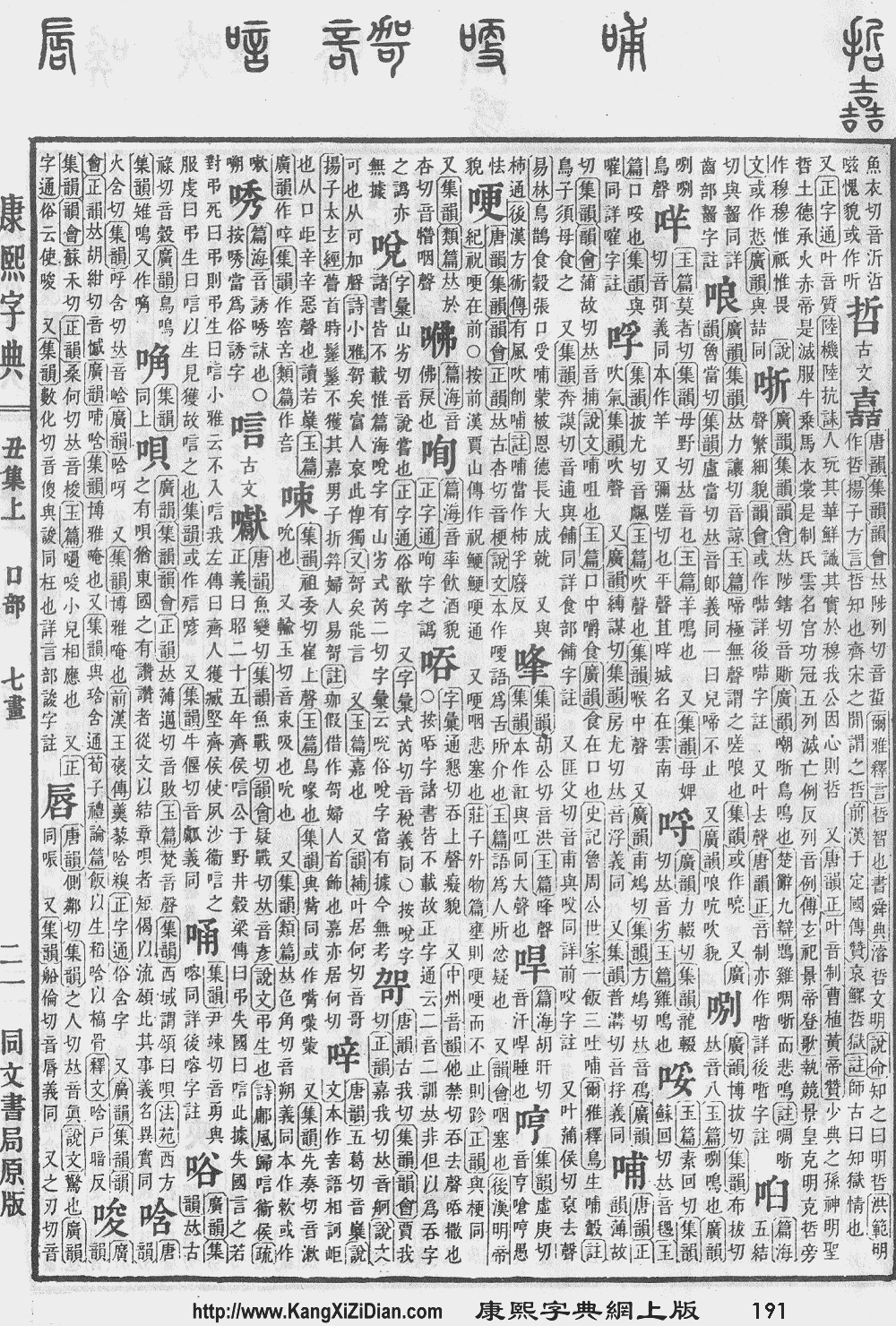
- Kangxi Dictionary: page 191, character 32
- Dai Kanwa Jiten: character 3697
- Dae Jaweon: page 411, character 8
- Hanyu Da Zidian (first edition): volume 1, page 627, character 7
- Unihan data for U+5507
Chinese
Glyph origin
| Old Chinese | |
|---|---|
| 辴 | *tʰɯl, *tʰɯnʔ, *tʰɯn |
| 屒 | *tɯnʔ, *djɯn |
| 振 | *tjɯn, *tjɯns |
| 侲 | *tjɯn, *tjɯn |
| 桭 | *tjɯn, *djɯn |
| 唇 | *tjɯn, *ɦljun |
| 帪 | *tjɯn |
| 賑 | *tjɯnʔ, *tjɯns |
| 裖 | *tjɯnʔ |
| 敐 | *tjɯnʔ, *djɯn |
| 震 | *tjɯn |
| 娠 | *tjɯns, *hljɯn |
| 蜃 | *djɯns, *djɯnʔ, *djins |
| 辰 | *djɯn |
| 晨 | *djɯn, *ɦljɯn |
| 宸 | *djɯn |
| 鷐 | *djɯn |
| 麎 | *djɯn |
| 祳 | *djɯnʔ |
| 脤 | *djɯnʔ |
| 鋠 | *djɯnʔ |
| 磭 | *ŋrɯnʔ, *ŋ̊ʰjaɡ, *ŋaɡ |
| 陙 | *djun |
| 脣 | *ɦljun |
| 漘 | *ɦljun |
Phono-semantic compound (形聲/形声, OC *tjɯn, *ɦljun) : phonetic 辰 (OC *djɯn) + semantic 口 (“mouth”).
Etymology 1
| For pronunciation and definitions of 唇 – see 脣 (“lip; lip-shaped thing; etc.”). (This character is the simplified and variant traditional form of 脣). |
Notes:
|
Pronunciation 1
Pronunciation 2
Japanese
Readings
Etymology
| Kanji in this term |
|---|
| 唇 |
| くちびる Grade: S |
| kun’yomi |
The くち (kuchi) element is 口 (“mouth”); several dictionaries, such as Kōjien[1] gloss the meaning of this overall term as 口縁 (kuchiberi), consisting of 口 (kuchi, “mouth”) + 縁 (heri, “edge”). Therefore the current pronunciation kuchibiru may be a shift from an earlier kuchiberi. The h of heri now becomes a b in an instance of rendaku, but may not have in older Japanese.
(This etymology is missing or incomplete. Please add to it, or discuss it at the Etymology scriptorium.)
Noun
唇 • (kuchibiru)
- lips
-
- 唇口 上音眞, 訓久知比流
- Lips. The Chinese pronunciation above is like shin; the Japanese reading is kuchibiru < kutibi1ru.
-
Derived terms
- 上唇 (uwakuchibiru), 上唇 (jōshin)
- 下唇 (shitakuchibiru), 下唇 (kashin)
- 紅唇 (kōshin)
References
- Shinmura, Izuru, editor (1998), 広辞苑 [Kōjien] (in Japanese), Fifth edition, Tōkyō: Iwanami Shoten, →ISBN
- Matsumura, Akira, editor (2006), 大辞林 [Daijirin] (in Japanese), Third edition, Tōkyō: Sanseidō, →ISBN
- NHK Broadcasting Culture Research Institute, editor (1998), NHK日本語発音アクセント辞典 [NHK Japanese Pronunciation Accent Dictionary] (in Japanese), Tōkyō: NHK Publishing, →ISBN
- Takeuchi, Rizō (1962) Nara Ibun: Volume 3 (in Japanese), Tōkyō: Tōkyōdō Shuppan, →ISBN.
Korean
Hanja
唇 • (jin) (hangeul 진, revised jin, McCune–Reischauer chin, Yale cin)
- This term needs a translation to English. Please help out and add a translation, then remove the text
{{rfdef}}.
Kunigami
Pronunciation
- IPA(key): /subaː/
Pronunciation
- IPA(key): /ɕibaː/
References
- “しばー” in JLect - Japonic Languages and Dialects Database Dictionary, 2019.
Miyako
Pronunciation
- IPA(key): /ss̩ba/
References
- “すば【唇】” in JLect - Japonic Languages and Dialects Database Dictionary, 2019.
Okinawan
Etymology
| Kanji in this term |
|---|
| 唇 |
| しば Grade: S |
| kun’yomi |
Pronunciation
- IPA(key): /ɕiba/
References
- “しば” in JLect - Japonic Languages and Dialects Database Dictionary, 2019.
Toku-No-Shima
Pronunciation
- IPA(key): /sɨbja/
Vietnamese
Yaeyama
Pronunciation
- IPA(key): /sɨba/