aloé
Hungarian
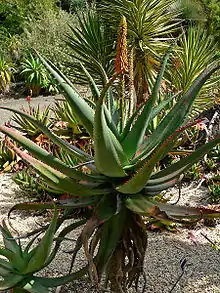
aloé
Etymology
Borrowed from Latin aloē (“aloe”), from Ancient Greek ἀλόη (alóē, “aloe”),[1][2] from Hebrew אֲהָלִים (ʾăhālîm), ultimately from Tamil அகில் (akil).
Pronunciation
- IPA(key): [ˈɒlojeː]
- Hyphenation: aloé
- Rhymes: -jeː
Noun
aloé (plural aloék)
- (botany) aloe (plant of the genus Aloe)
- (archaic) aloe (strong, bitter drink made from the juice of aloe, used as a purgative)
- (botany, dated) century plant, American aloe (Agave americana)
- Synonyms: százéves aloé, agávé, amerikai agávé, közönséges agávé
Declension
| Inflection (stem in long/high vowel, back harmony) | ||
|---|---|---|
| singular | plural | |
| nominative | aloé | aloék |
| accusative | aloét | aloékat |
| dative | aloénak | aloéknak |
| instrumental | aloéval | aloékkal |
| causal-final | aloéért | aloékért |
| translative | aloévá | aloékká |
| terminative | aloéig | aloékig |
| essive-formal | aloéként | aloékként |
| essive-modal | — | — |
| inessive | aloéban | aloékban |
| superessive | aloén | aloékon |
| adessive | aloénál | aloéknál |
| illative | aloéba | aloékba |
| sublative | aloéra | aloékra |
| allative | aloéhoz | aloékhoz |
| elative | aloéból | aloékból |
| delative | aloéról | aloékról |
| ablative | aloétól | aloéktól |
| non-attributive possessive - singular |
aloéé | aloéké |
| non-attributive possessive - plural |
aloééi | aloékéi |
| Possessive forms of aloé | ||
|---|---|---|
| possessor | single possession | multiple possessions |
| 1st person sing. | aloém | aloéim |
| 2nd person sing. | aloéd | aloéid |
| 3rd person sing. | aloéja | aloéi |
| 1st person plural | aloénk | aloéink |
| 2nd person plural | aloétok | aloéitok |
| 3rd person plural | aloéjuk | aloéik |
Derived terms
- aloés
Compound words
- aloébokor
- aloéfa
- aloéfaj
- aloélevél
- aloétövis
- aloévirág
- tigrisaloé (Gonialoe variegata)
Expressions
- orvosi aloé (Aloe vera)
- százéves aloé (Agave americana)
References
- Tótfalusi, István. Idegenszó-tár: Idegen szavak értelmező és etimológiai szótára (’A Storehouse of Foreign Words: an explanatory and etymological dictionary of foreign words’). Budapest: Tinta Könyvkiadó, 2005. →ISBN
- aloé in Gerstner, Károly (ed.). Új magyar etimológiai szótár. (’New Etymological Dictionary of Hungarian’). Beta version. Budapest, MTA Nyelvtudományi Intézet / Magyar Nyelvtudományi Kutatóközpont, 2011–2022. (Research Institute for Linguistics, Hungary). Language abbreviations
Further reading
- áloé in Bárczi, Géza and László Országh. A magyar nyelv értelmező szótára (‘The Explanatory Dictionary of the Hungarian Language’, abbr.: ÉrtSz.). Budapest: Akadémiai Kiadó, 1959–1962. Fifth ed., 1992: →ISBN
- aloé in Ittzés, Nóra (ed.). A magyar nyelv nagyszótára (‘A Comprehensive Dictionary of the Hungarian Language’). Budapest: Akadémiai Kiadó, 2006–2031 (work in progress; published A–ez as of 2024)
Norman
Etymology
From Old French aloes, from Latin aloē, from Ancient Greek ἀλόη (alóē, “aloe”), from Hebrew.
Portuguese
Alternative forms
- áloe, aloés
Pronunciation
- (Brazil) IPA(key): /a.loˈɛ/
- (Portugal) IPA(key): /a.lɔˈɛ/, /aˈlwɛ/
- Rhymes: -ɛ
- Hyphenation: a‧lo‧é
References
- “aloé” in Dicionário infopédia da Língua Portuguesa. Porto: Porto Editora, 2003–2024.
- “aloé” in Dicionário Priberam da Língua Portuguesa.
This article is issued from Wiktionary. The text is licensed under Creative Commons - Attribution - Sharealike. Additional terms may apply for the media files.