It's a consequence of the equation of time, which represents the time difference between apparent solar time (time as measured by a sundial) and mean solar time (a fictitious device; essentially mean solar time is time as measured by a clock). Below are two plots from the referenced website.
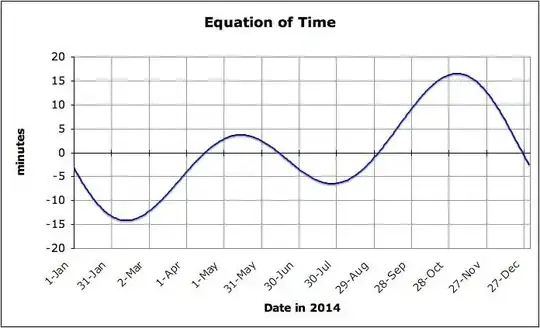
Figure 1: Equation of time. Currently (early January), a sundial will be slightly behind a clock and is getting slower.
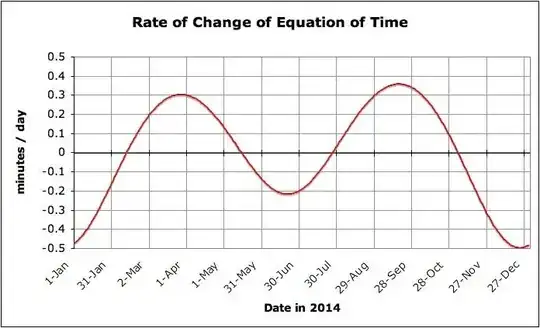
Figure 2: Time derivative of the equation of time. Apparent solar time changes most rapidly from early December to early January, with the maximum change occurring on December 25.
Days are currently getting longer in the northern hemisphere, but noon is advancing by 20 to 25 seconds per day. Sunset advances by half of the increase in the length of day plus that 20 to 25 second advance in noon. Sunrise advances by half the increase in length of day less that 20 to 25 second advance in noon.
The increase in the length of day (time from sunrise to sunset) depends on latitude. In Bogota Columbia (4°35′53″N latitude), length of day increases by only 3 to 10 seconds per day during January, growing throughout the month. That tiny change in length of day means sunrise continues to advance throughout the month of January in Bogota. On the other hand, in Reykjavík, Iceland (64°08′N latitude), length of day increases drastically from day to day, even at this time of year. Sunrise started becoming earlier in Reykjavík on Christmas day.


