You can't do this. (see comments below) Expanding on quietflyer's comment, the result (consequences), of adding mass in a constant thrust scenario depends on where the aircraft (wing) is on the power curve. This is a graph representing the relationsip between airspeed (horizontal scale), and the power or thrust required (vertical), to maintain that airspeed. The curve is U-shaped. The two points where the red and blue lines intersect are the only two stable points on the graph.
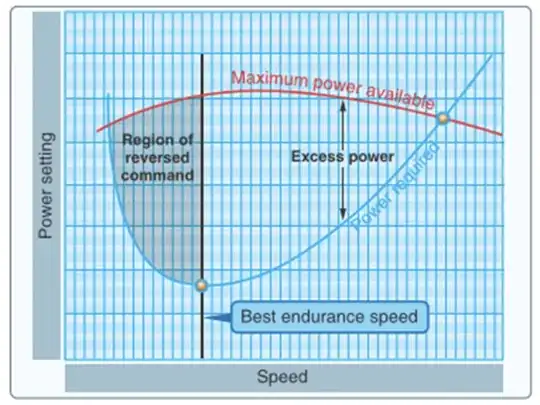
For all aircraft there is a speed (the bottom or lowest point on the blue U-shaped curve), where the power(thrust) required to maintain that speed is a minimum. I.e., to maintain any faster, (or slower) speed, requires more thrust or power. This is because the drag due to lift increases as AOA increases, and at slow speeds, (high AOA), this increase is greater than the reduction in drag from just going slower.
So, if above, (faster), than that airspeed corresponding to L/Dmax, reducing thrust, (moving the red line down), and slowing down brings you closer to that minimum thrust required airspeed, (assuming you continue to trim to maintain level flight), and then, unless you reduced thrust below the thrust required for that slower speed, when you have slowed to the speed that your reduced thrust can maintain, the aircraft will stabilize.
If, otoh, you start this exercise from below your L/Dmax airspeed, then the scenario you describe would happen.


