14

The question Are pilots allowed to let passengers fly the plane? is interesting to read, noting that pilots are permitted to allow passengers to fly.

I recall an Air Crash Investigation episode (AFL593) where the pilot pretended to allow his son to manipulate the controls of an airliner, without realising the autopilot had been disconnected, resulting in an accident.

I'm wondering how commonplace this is? Is this an isolated incident?

On the flip-side, I've heard of at least 3 occasions where passengers have successfully landed planes, e.g:

Danny Beckett
  • 16,627
  • 28
  • 98
  • 176
  • 1
    @fooot Yep, that's the one! – Danny Beckett Apr 08 '14 at 02:08
  • 2
    I wonder if this questions would be more appropriately titled "are passengers allowed to fly commercial flights under the direction of the flight crew?" The title, as it stands, is clearly answered by the question itself. – Jae Carr Apr 08 '14 at 17:22
  • @DannyBeckett The second link you have is a song? – Farhan Apr 08 '14 at 18:29
  • @Farhan The link is to a recent documentary: Mayday! The Passenger Who Landed A Plane – Danny Beckett Apr 08 '14 at 18:31
  • Passengers are not allowed to fly a commercial plane. The question you reference says that a passenger can take the controls on a private flight only. – Ben Nov 14 '14 at 10:16
  • @Ben As I mentioned, it's happened at least once. I wanted to know if there were any other recorded accidents like it. – Danny Beckett Nov 15 '14 at 01:07
  • Sorry Danny you may have misunderstood me. Your question is a good one as it has happened at least once. But the first line of this question says "noting that pilots are permitted to allow passengers to fly". Which is not entirely the case - they're only permitted to fly if it is a private flight, not a commercial one. – Ben Nov 17 '14 at 08:39
  • Please fix the links. – Cary Swoveland Dec 31 '14 at 21:08
  • @CarySwoveland Sorry about that, the link I watched "Mayday! The Passenger Who Landed A Plane" on seems to have gone down. I've replaced the link with a different instance of a passenger landing a plane. If you can find it online, it's well worth a watch. It was unrelated to the popular air crash show Mayday. I believe it was BBC, though it could've been any UK TV channel. – Danny Beckett Jan 01 '15 at 20:12
  • I was interested and did watch other accounts of the crash. "Passenger Who Landed a Plane" isn't quite accurate, unfortunately. – Cary Swoveland Jan 01 '15 at 21:13
  • 1
    If I'm not mistaken, AFL593 crashed because of a bug in Airbus firmware which disconnected autopilot (without warning the pilot) after 2-3 strong yoke's moves, made by that kid. Kid did not turned off autopilot himself. Father (pilot) let his son to pilot the plane, only because he was 100% certain and sure, that kid will not actually pilot the plane, due to autopilot being engaged. That was the conclusion from mentioned ACI episode. In this case, I wouldn't call AFL593 an example of passenger crashing commercial plane at all. – trejder Mar 10 '15 at 08:50
  • 5
    @trejder I don't believe that's correct. AFAIK, it was not a bug in firmware, it was an intentional design feature to disconnect the autopilot if the pilot was supplying control inputs that conflicted with the autopilot's (on the theory that the pilot probably knew what they were doing, and they didn't want to do what the A/P wanted to do, so the A/P should yield control). It didn't act like the crew expected, but it acted like it was designed to act. – cpast Mar 31 '15 at 06:24
  • @cpast I cannot address Airbus firmware or design issues, because this is not my area of expertise. And I can hardly address mentioned ACI episode, because I watched it about 5 or 6 years ago. But. from what I still recall from watching it, even if that was a design feature, the fact, that there was no visual indication, that A/P is disengaged, is an obvious feature or design flaw. And it sounds logic even too me, just a mere passenger. If something is on and it is so important, that entire flight safety depends on it, the I should be visually warned once that thing goes off. – trejder Mar 31 '15 at 07:22
  • @cpast I'm more than sure, that there would be no trouble on-board and no crash at all, if pilots would be informed visually immediately after A/P was switched off. Their surprise (recorded) about plane movements clearly suggests, that they were very surprised and didn't know, what is going on. Therefore, I must again claim, that this particular air crash was IMHO much-much more based on design flaw and has merely nothing about passenger crashing a plane. But, that's just my opinion and you're free to disagree with it. – trejder Mar 31 '15 at 07:24
  • @trejder: AIUI there is a visual indication of the change in autopilot status (which isn't simply an all-automatic or all-manual choice). Wikipedia says " A silent indicator light came on to alert the pilots to this partial disengagement. The pilots, who had previously flown Russian-designed planes which had audible warning signals, apparently failed to notice it." See http://aviation.stackexchange.com/questions/390/did-airbus-add-an-audible-alert-when-the-autopilot-partially-disengage-after-the – RedGrittyBrick Mar 31 '15 at 09:43
  • A distinction between cases where the pilot let a passenger take control and cases where a passenger takes control with force might be relevant. I recall four incidents a little more than a decade ago in which passengers took control of a plane and crashed it. All four incidents happened within a day. – kasperd Mar 31 '15 at 14:12
  • 1
  • 2
    Do you count hijackings resulting in the hijacker crashing the plane? – raptortech97 Apr 03 '15 at 01:40
  • 1
    Some years ago a KC-135 crashed during an aborted takeoff. Turns out a civilian with zero flight experience was in the co-pilot seat. Totally against regulations of course, but there you are. The civilian did not cause the accident but there was no qualified pilot in the seat when it counted most. – radarbob Oct 03 '15 at 23:19

4 Answers4

14

No passengers have crashed an airplane while the pilot was letting them fly.

In this situation, the PIC crashed the plane because he didn't do his job as the captain and final authority for the safe operation of the airplane.

Letting a passenger fly would most likely be listed as a "contributing factor" by investigators looking into an accident where this happened, but responsibility for the crash lies squarely on the PIC.

Lnafziger
  • 58,886
  • 39
  • 242
  • 423
  • 10
    'tis a fine mincing of words, worthy of the most gourmet attorney -- yet it is also correct (in so far as the FAA, NTSB, and Insurance company are concerned) – voretaq7 Apr 08 '14 at 02:00
  • 8
    This answer is noteworthy, but doesn't actually touch on the question itself. – Danny Beckett Apr 08 '14 at 02:01
  • 4
    Hey, it answers the question in the title! ;-) – Lnafziger Apr 08 '14 at 02:07
  • 1
    At what point does responsibility begin to attach to the person manipulating the controls? Is the PIC fully responsible for the SIC's ability to control the aircraft? If not, is the threshold that the person on the controls was licensed to operate that aircraft in those conditions, or is it something else? – cpast Mar 30 '15 at 19:17
  • 5
    @cpast Yes, the PIC is responsible for taking over control of the aircraft if the SIC is not capable. The PIC is always responsible.... – Lnafziger Mar 30 '15 at 21:44
  • @Lnafziger: Unless the PIC becomes incapacitated, in which case responsibility defaults to the SIC. – Vikki Dec 04 '18 at 04:38
  • Responsibility is besides the point. The PIC may be legally responsible, but the person crashing the plane (this was the question) by his actions may still be the passenger, not the PIC. – summerrain Jan 07 '19 at 01:22
7

Please see the transcript of Aeroflot 593

Overview: The pilot allowed his 12 year old and 16 year old children into the cockpit to sit in the pilot's seat of an Airbus A310. The older child's actions disconnected the autopilot. All aboard were killed when the crew was unable to recover from an unusual attitude after the autopilot disconnect.


Another possible passenger-caused accident is the death of Thomas J. Stewart and his family in a Eurocopter EC135 in Phoenix. Stewart allowed his 5 year old daughter to sit in his lap during the flight. The NTSB concluded that the daughter kicked the controls and that the pilot's recovery attempt severed the tail. Both Stewart and his daughter were passengers and may have caused the accident with their actions.

dawg
  • 937
  • 7
  • 13
7

There was a passenger who crashed an light aircraft over Bodensee in Austria. Psychological factors were assumed to be the reason the passenger forced the controls forward crashing the plane into the lake. He and the pilot were killed.

Source: Der Standard (in German)

Thunderstrike
  • 33,169
  • 6
  • 131
  • 195
4

I recall an Air Crash Investigation episode

Aeroflot flight 593 Moscow–Hong Kong, Airbus A310-300, Russia, 23 March 1994

where the pilot pretended to allow his son to manipulate the controls of an airliner,

The pilot actually allowed his son to manipulate the flight controls. The A310 has a conventional yoke.

The autopilot was engaged at the time, so small movements of the flight controls had no effect. The pilot pretended to his son that he was in full control.

Large, forceful movements contradicting the autopilot caused the autopilot to relinquish control to the pilot (the autopilot assumes the pilot knows best) - in this case, control over ailerons (but not over pitch, airspeed, altitude, throttles etc).

Pilots are not dropped into new aircraft without training to understand how use of the controls affect the autopilot. The pilot's actions were reckless and he failed to monitor the childs actions and their effects.
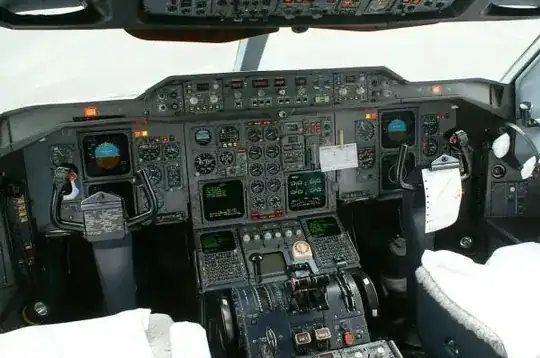
enter image description here
A310 cockpit - Image source

without realising the autopilot had been disconnected

The appropriate indicator light illuminated to show that there was manual control over ailerons but it seems the pilot was too busy entertaining his child to pay proper attention to flying the aircraft.

The "cavalry charge" audio alert only occurs when the autopilot is fully disengaged.

lights on the instrument panel show what aspects of flight the autopilot is controlling.

It was actually the child who first noticed that the aircraft was banking!

resulting in an accident.

In combination with inappropriate actions by panicing pilots.

Despite the struggles of both pilots to save the aircraft, it was later concluded that if they had just let go of the control column, the autopilot would have automatically taken action to prevent stalling, thus avoiding the accident.[11]

(Wikipedia)

I'm wondering how commonplace this is?

It seems to be very uncommon for children and/or other passengers to enter the cockpit midflight and cause a crash.

Is this an isolated incident?

No. See dawg's answer. It may be the only case on an Airbus.

RedGrittyBrick
  • 26,324
  • 3
  • 89
  • 136
  • IMHO this incident is more about the obtuse complexities of the autopilot than the kid. I am stunned to think the pilot let the aircraft get out of normal flight parameters like that. In my day if the autopilot did anything unexpected it was disconnected immediately. We never let the autopilot "take us for a ride." Or, conversely, assume that is would save me from the other pilot. – radarbob Oct 03 '15 at 23:34