8

I had a question come up:

If aircraft A is identical to aircraft B, except that aircraft B weighs 200 kg more. Which of the following statements are true?

The answer I selected was wrong:

Aircraft A would need less power to fly at the same speed as aircraft B

I pictured that with less weight, a reduced angle of attack would result in less drag and hence less power? Would anyone be able to “lighten” me with this?

Thanks for the feedback, it may have just been a typo..
The 4 multiple choices where:
1) Aircraft A would need less power to fly at the same speed as aircraft B
2) Aircraft A would need the same power to fly at the same speed as aircraft B
3) Aircraft B would have poorer climb performance
4) Aircraft B would require a longer runway for landing

Jesse
  • 137
  • 1
  • 6
  • Your response is true as long as both aircraft fly at or above minimum drag speed at the speed in question. – Cpt Reynolds Jun 02 '18 at 11:43
  • 1
    It looks like your choice was correct, and there is an exam typo, but usually multiple guess (er.. choice) questions include at least 4 choices. If you can, edit your post to list all of the choices. They are always structured so that there is a right one and an almost right one, while the rest are obviously wrong. They are designed to force you to think through the question carefully to choose the correct one over the nearly correct one, and if you can't because you don't know the material well enough, chances are you will pick the wrong one. – John K Jun 02 '18 at 13:55
  • I believe this is likely an error in the test. At any speed, whether above or below Minimum Drag speed, the heavier the gross weight at that same speed, the higher the AOA, and therefore the induced drag. Form drag, as the aircraft are identical in shape, would be identical, except for a very slight difference because the frontal presentation might be very slightly different due to the higher AOA. What was the "right" answer? What were the other choices? – Charles Bretana Jun 02 '18 at 15:43
  • 1
    I'm unsure of what all is included in "identical," but it would have to include the c.g. to properly compare the two. If they're completely identical, including c.g., the heavier aircraft will need more power, burn more fuel. However, if the lighter aircraft has its c.g. up against the forward limit and the the heavier aircraft has the c.g. up against the aft limit, the lighter aircraft might burn more fuel if the aircraft is of what we usually think of as the common type, i.e. the tail is providing a downward force to balance the lift of the wing. – Terry Jun 02 '18 at 16:53
  • 2
    The question asks, "Which of the following statements are true?" Note: statements are, not statement is. Is it possible there was another true statement in the list and you were marked incorrect because you did not select both of the true statements? – David K Jun 03 '18 at 01:01
  • 1
    @CptReynolds: No, even below minimum drag speed the lighter aircraft needs less power. – Peter Kämpf Jun 03 '18 at 08:01
  • @PeterKämpf I think you are correct and I must have been not quite awake when posting. – Cpt Reynolds Jun 03 '18 at 19:24

2 Answers2

8

You are right. The heavier aircraft needs more power. With one exception.

The power needed to keep an aircraft in the air is the product of flight speed and drag. When flying at the same speed, the drag of both aircraft is crucial to answer the question. Since both share the same geometry, it is safe to assume that both have about the same friction and parasitic drag. But the heavier aircraft needs to fly at a higher lift coefficient in order to carry its higher mass, so it will create more induced drag.

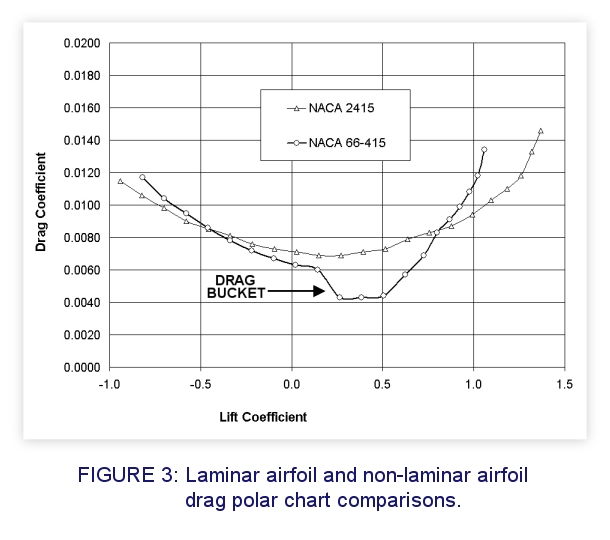
The one exception is when both aircraft have a highly laminar airfoil with a pronounced drag bucket. If the flight speed is picked such that the heavier aircraft will still fly within this drag bucket but the lighter aircraft will fly at a lift coefficient below the lower boundary of that drag bucket, the difference in friction drag could be higher than the difference in induced drag (which is small at high speed). But that exception would need to be made clear in the question.

To fully judge the correctness of the test, please provide all answers. As @David K suggests, your error might have been not to select all correct answers.

Peter Kämpf
  • 231,832
  • 17
  • 588
  • 929
  • Thanks for that! Yes here are the options, and multiple answers can be selected.. I selected A,C and D.. so it may have just been a typo!
    a) Aircraft A would need less power to fly at the same speed as aircraft B b) Aircraft A would need the same power to fly at the same speed as aircraft B c) Aircraft B would have poorer climb performance d) Aircraft B would require a longer runway for landing
    – Jesse Jun 10 '18 at 05:08
  • @Jesse: I agree with your selection of answers. – Peter Kämpf Jun 10 '18 at 14:32
-4

At constant speed the forces of thrust and drag are equal. Since F=m*a, the ratio between accelerations due to these forces is the same regardless of mass. Therefore, they equalize at the same velocity (drag is dependent on velocity) - no more thrust is needed to counteract decceleration due to drag

Francis L.
  • 2,514
  • 14
  • 36
  • 4
    Maybe my nearly-80 year old brain isn't functioning properly, but I don't see how this answers the question. And, if you're saying, in effect, that a 747 in cruise at mach 0.86 at 700,000 lbs doesn't burn more fuel (more power) than one at 600,000 lbs at the same speed, I can assure you that is incorrect. – Terry Jun 02 '18 at 20:03