33

I was at the California Capital Airshow on Mather AFB over the weekend, and came across a beautifully maintained B-17 Flying Fortress. The crew were kind enough to allow people to go inside and take a look - what a magnificent machine!
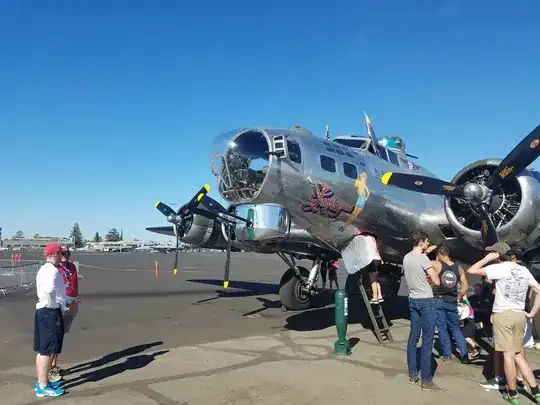
While inside, I noticed the dome gunner seems to be in a position to accidentally shoot the tail off the plane!
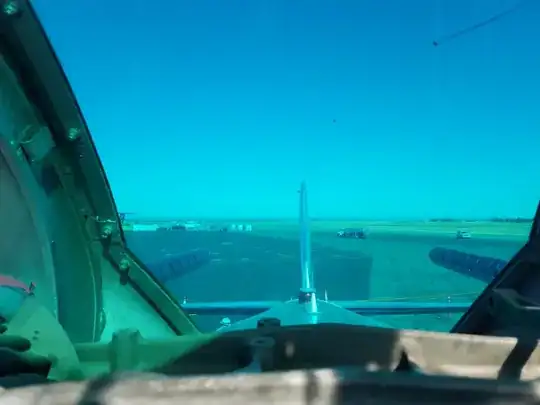
Are there any confirmed instances of this happening? Was there some way to prevent it - either be it training or some mechanism that stopped the guns while in this position? I can imagine, in the heat of battle, sweeping an enemy fighter and nicking your own tail in the process!

Machavity
  • 5,993
  • 2
  • 28
  • 57
SnakeDoc
  • 2,438
  • 3
  • 26
  • 43
  • 3
    This page contains an account of a waist gunner shooting the tail, but I'm unable to do more research into it at the moment. – Ron Beyer Sep 24 '18 at 16:51
  • @RonBeyer Oh wow, good find! 'The entry in the pilot’s diary, dated Feb 18th, 1943, says, “New waist gunner shot hell out of tail today. Ship out for a week.”' – SnakeDoc Sep 24 '18 at 16:57
  • 20
  • 1
    IIRC shooting your own aircraft was a serious risk with pintle mounted machine guns in early WW1 aircraft. – Dan Is Fiddling By Firelight Sep 24 '18 at 19:56
  • 17
    My grandfather was an air Sargent and gunner on B-17. He told me a story where he had accidentally shot down his plane because the ball turret gun cutoffs were wired shut. These cut-offs were to prevent hitting the aircraft was the turret guns rotated but German fighters quickly learned to approach bombers these angles. This led to crews wiring shut the cut-offs. Fortunately for my grandfather, being the air Sargent, he was responsible for the combat log for the mission and also enemy fighters were encountered so he could report the plane was hit by enemy fire. – Earth Science Expatriate Sep 25 '18 at 13:10
  • 1
    @DanNeely That's correct. It took the invention of Fokker's interrupter, which automatically repressed fire when a blade was in front of the gun, to prevent this. – forest Sep 26 '18 at 06:35
  • 1
    That second comment above deserves to be incorporated into an answer; great info, ditto the second comment down from top. – quiet flyer May 17 '19 at 19:05

1 Answers1

49

There's a profile cam in the turret track ring that operates a mechanism that interrupts the guns when the barrels are pointed at parts of the aircraft. Waist gunners were the only ones who had to worry about hitting their own plane.

The bigger problem was gunners hitting adjacent aircraft. The "box" formation design attempted to provide as much of an open field as possible to each gunner.

John K
  • 130,987
  • 11
  • 286
  • 467
  • 3
    Not just gunners hitting friendly air craft - the bombs themselves have hit planes flying below them as well. Recall watching old WW2 documentaries w/ various gun cam footage and seeing it happen... – ivanivan Sep 24 '18 at 22:07
  • 1
    Didn't the top turret gunner also have the potential (if there were no interrupter mechanism) to shoot part of the plane, as shown in the question? – Wayne Conrad Sep 24 '18 at 23:21
  • 1
    @WayneConrad as far as I know yes the B-17 specifically did have such a feature in the top gunner position. I think that's what John K meant, but there are bombers with such positions that did not have any such mechanism, ahem some German bombers. – Jihyun Sep 25 '18 at 03:45
  • It's this statement that I'm confused about: "Waist gunners were the only ones who had to worry about hitting their own plane." I wonder if John meant to write "were not the only ones." – Wayne Conrad Sep 25 '18 at 13:20
  • 2
    The only gunners that had the ability to shoot directly into their own airplane's structure were the waist gunners. – John K Sep 25 '18 at 13:35
  • 3
    @JohnK Would this then be accurate? "Because the top turret gun had an interrupter mechanism, it could not shoot the airplane even though it could aim at the tail. However, the waist guns, which had no interrupter mechanism, could be aimed at the airplane. Therefore, the waist gunners were the only ones who had to worry about hitting their own plane." – Wayne Conrad Sep 25 '18 at 13:45
  • How large was the "shadow" created by the cam mechanism? Did it create a "safe area" for ememy aircraft, or was the area created by the cam not really any bigger than that created by the tail itself? – supercat Sep 25 '18 at 14:46
  • 2
    @supercat - that's a great new question - why don't you ask it! – FreeMan Sep 25 '18 at 14:53
  • @FreeMan: I would expect that anyone with information about the size of the "shadow" would also be reading this question, and many people interested in this question would be curious about how accurately the shadow produced by the mechanism matches the shadow produced by the tail. – supercat Sep 25 '18 at 14:55
  • 2
    @supercat you'd be amazed at the knowledge and mad Google skillz of this community! Also, just because it's only interesting to you doesn't mean it's not a good question. It would also be interesting to me, and a lot of others would read it and think, "Huh... that's a good question! Wish I'd thought of it!" – FreeMan Sep 25 '18 at 14:58
  • @FreeMan: It is sufficiently related to this question that if anyone would know the answer, I would think it should be included in an answer to this question. – supercat Sep 25 '18 at 15:06
  • @supercat A good way to deal with a related question like that is to ask it as a separate question, but in the question body, link to the related question/answer. – Wayne Conrad Sep 25 '18 at 15:51
  • @supercat This comment by Gary Kindel indicates that the shadow was substantial. – Emil Jeřábek Sep 25 '18 at 15:55
  • If you fish around on the web you can prolly find a Sperry or Bendix operating manual. – John K Sep 25 '18 at 16:37