Angle of attack is the angle between relative wind, a.k.a. flight path, and the reference datum (chord line in the below image, but might be just given relative to longitudinal axis of the aircraft especially since many aircraft have wing twist, so the chord line varies along span).
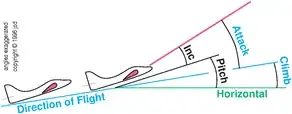
(figure from How It Flies section 2.4)
Now to you cases
Just after rotation, I would assume that the angle of attack is equal to x, but after this I get confused.
As the pilot pulls on the control column and the elevators deflect up, the aircraft starts to pitch up. As it pitches up, the angle of attack increases. That increases lift, which is proportional to angle of attack (in the non-stalled region).
As the lift increases, the aircraft will start accelerating upwards, which means its flight path angle will increase. The pitch angle still increases at the same rate, but now the flight path angle also does, so their difference—angle of attack—increase will slow down until it stabilises at some value where the flight path angle rate catches up with the pitch rate.
If the pilot then pushes the control column back and neutralizes the elevator deflection, the aircraft will stop pitching up and the angle of attack will decrease again until the flight path rate stops as well.
In fact the angle of attack at which the aircraft will stabilise is proportional to the elevator deflection (for longitudinally stable aircraft), so if the pilot lets the control column return to its trimmed position, the aircraft will assume the original angle of attack again.
I'll refer you to the mentioned How It Flies chapter 2. Angle of Attack Awareness and Angle of Attack Management for further details.

