Sideslip is simply lateral movement due to the tilting of the wing lift vector away from vertical. Moving forward while moving laterally means the lateral movement becomes a horizontal arc and becomes a turn. The vertical fin keeps the body of the plane aligned in the airstream, so the body follows the arc and you have a heading change and a coordinated turn.
You could say the lift force of the wing is a thrust force. Any time the thrust force is tilted from vertical, the thrust force develops a lateral as well as vertical force component, and because the lateral thrust component decreases the vertical thrust component, the sideslip also introduces a descent. To stop the descent, you have to increase the total lift to restore the original value of the vertical lift component, so you have to increase angle-of-attack to increase total lift.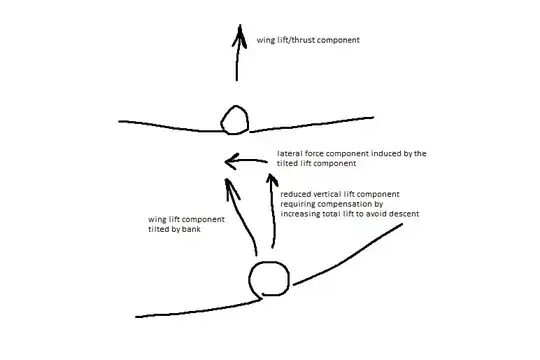
Think of a helicopter hovering with the rotor disc level. All of the rotor's thrust is vertical. The pilot tilts the rotor with cyclic, tilting the rotor's thrust, introducing a lateral component to the thrust, and the machine moves sideways (and downward because the vertical lift component was reduced, requiring the pilot to increase total rotor thrust with collective), and if it's moving forward instead of hovering while this is going on, the sideways movement becomes an arc, or a turn.
The term sideslip, when applied to flying, tends to refer to the lateral movement without the yawing motion induced by the fin, so that the airplane is turning, but slewing sideways while doing so, and the fin's job is to stop the slewing by weathervaning the tail to keep the body aligned in the relative airflow.
Problem is, dihedral effect requires this sideways slewing to be present when the airplane banks, so that the differential lift created by the slewing motion (sideslip) provides a restorative righting moment. A small amount of sideslip must be permitted to happen when the airplane is banked by a disturbance to allow dihedral effect to work, but not too much, and not too little.
Vertical fin sizing has to find the sweet spot where a bit of slip is allowed to develop when the plane is banked by a bump, without letting it get out of hand. Make the surface too small, and the airplane develops too much slip when banking and generally yaws around too much, make it too big and the plane instantly yaws or weathervanes into the bank to remove the sideslip, dihedral becomes ineffective, and the plane tends to want to always spiral into the bank with any disturbance.


