Owing to the generality of the question I am interested merely in key problems so that I could do further reading.
As I understand man-made energy storages are significantly less efficient than biological ones. I would like to focus on quickly available energy for small systems (human scale or smaller) - after all we can say that hoards of coal are a pretty nice energy reservoir.
For example, a robotic bee:
https://www.youtube.com/watch?v=lJCMIsLuGpg
What can we see here? A wire - and I think we cannot expect to have a long lasting independent robotic bee with the current technology due to inefficiency of our energy storage.
How do biological systems store the energy then? https://en.wikiversity.org/wiki/Energy_Storage_in_Biological_Systems
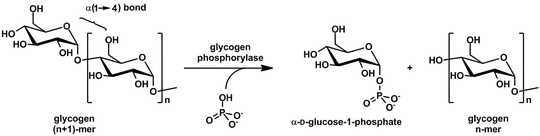
Living organisms use two major types of energy storage. Energy-rich molecules such as glycogen and triglycerides store energy in the form of covalent chemical bonds. Cells synthesize such molecules and store them for later release of the energy. The second major form of biological energy storage is electrochemical and takes the form of gradients of charged ions across cell membranes. This learning project allows participants to explore some of the details of energy storage molecules and biological energy storage that involves ion gradients across cell membranes.
To be more specific let me give an example: why cannot we have a machine that would have an input for carbohydrates, a converter to say glucose and then ATP which would finally break down and release the needed energy?
Why is it not viable? Do we lack technology to do this? Which step is problematic? Are we far from having biological-like storages?