11

Apparently all living humans are matrilineal descendants of a single woman who lived 200.000 years ago. She is called Mitochondrial Eve.

But at the time she lived there was a different matrilineal ancestor that all living humans shared. And between then and now I imagine many other women have been Mitochondrial Eves of the human population that lived at a particular time.

What I'm wondering is what kinds of events would cause a different, more recent matrilineal ancestor to become the Mitochondrial Eve of all living humans?

One scenario I can image is that the human population is on the brink of extinction and literally only a few people survive. Because there are so few people alive, I imagine that the chance that they share a more recent matrilineal ancestor is high.

Are there other scenarios possible? Does the chance of a new Mitochondrial Eve emerging decrease if the human population is large (billions) instead of small (hundreds or thousands)? Suppose that the human population will not decrease, is it likely future human populations will ever have a different Mitochondrial Eve than the current population? Does it depend on the amount of people that migrate?

The same questions could be posed for Y-Chromosomal Adam and the most recent common ancestor of all humans, I guess...

molf
  • 213
  • 1
  • 5
  • An mathematical solution to this question is the Galton-Watson Process. It is formulated in terms of surnames and this situation is very similar. http://en.wikipedia.org/wiki/Galton%2DWatson_process – John Smith Dec 28 '12 at 19:17
  • It looks like the genetic Adam just got replaced... so there you go. http://www.newscientist.com/article/dn23240-the-father-of-all-men-is-340000-years-old.html – shigeta Mar 06 '13 at 23:12

3 Answers3

6

One possible scenario would be that a particular woman develops a mutation rendering her much more 'fit' (in the evolutionary sense) than her peers. For the sake of argument, lets take the very simplistic case of an X-linked recessive mutation causing the women who bear it to have say 10 children at each birth. If this mutation is then transferred to the offspring, it will very quickly spread across the entire population.

If this continues for a few generations, the crushing majority of the earth's population will be the descendants of that one woman who carried the original mutation, she would be the new mitochondrial Eve.

I want to stress that this is nothing but a very simplistic thought experiment. Such a mutation is i) very unlikely, probably impossible, ii) likely to render the carrying individual less fit rather than more as each birth would be exhausting, increasing the chances of dying during child birth.


Update:

I have specified that the mutation has to be X-linked and recessive. This means that it will only present a phenotype in women who are homozygous for it, women both of whose parents carried the mutation. This is because, as mgkrebbs very correctly pointed out in the comments below, otherwise her sons would mate with women who are not their sisters and their children would have the mutation but not her mDNA. If the phenotype is only expressed when the mutation is homozygous, only women whose mother carried the mutation (and Eve's mDNA) would show it and only then would a new mEve arise.

terdon
  • 12,803
  • 5
  • 46
  • 73
  • Not correct, as such a mutation would pretty much have to be in the nuclear genome, not the mitochondrial genome. Being on a nuclear chromosome, it would spread to offspring of women who are not her mitochondrial descendants, and thus she would not become a mitochondrial eve. – mgkrebbs Dec 14 '12 at 05:43
  • 2
    @mgkrebbs, huh? Of course the mutation would be in the nuclear genome and of course, by definition, it would pass to her descendants only. What exactly are mitochondrial descendants? Each female egg contains both the mitochondria and the genome of the parent. Yes, the mutation would not be carried by her mitochondria, however, her mitochondria would be carried by her descendants, therefore, she would be the new mitochondrial Eve (although, as shigeta points out, she would still be dcendant from our MEve herself). – terdon Dec 14 '12 at 11:11
  • But these mutations can ultimately also be transferred to the offspring through patrilineal descendants, right? What factor makes it likely that this woman would become a M-Eve? Was our M-Eve really so different from other women alive at the time? – molf Dec 14 '12 at 12:37
  • @molf, not necessarily no. The point is that mitochondria come from the mother not the father. Therefore, if one female has a much greater reproductive success than her peers, and that female's offspring do so as well, eventually ALL individuals will be the descendants of that one female. Since mitochondria come from the mother exclusively, all individuals will have the same mitochondrial genome. Their nuclear genome will be different as it is also affected by the father but that is irrelevant to the point discussed. – terdon Dec 14 '12 at 16:17
  • This is true but it is not necessary that one woman have much greater fitness. Even if fitness was equal drift would produce a mitochondrial eve with sufficient time. Just like one player will wind up with all of the money if the poker game goes on long enough, even if they are equal players. – DQdlM Dec 14 '12 at 16:20
  • @DQdlM, I'm not sure... Drift will affect the spread of genes through the population. I see no reason why it should afect MEve. – terdon Dec 14 '12 at 16:42
  • This is how I see it: if the population has 10 M-lines at equal freq. and fitness. At each generation the lines will be perpetuated based on their freq. W/o drift the freq. wouldn't change and no lines would go extinct but drift can raise or lower the freq. of a line by chance so over time some lines will become less frequent and more vulnerable to extinction and others will become more frequent and less vulnerable to extinction. Given enough time only one line will remain. This is MEve. – DQdlM Dec 14 '12 at 17:00
  • @DQdlM, OK, yes, I see your point. However, I am still not sure whether drift is applicable here. Even if the M-lines have equal freq. and fitness, the nuclear genomes of the hosts will not. Therefore, the fitness of the nuclear genotype will affect the spread of M-lines much more than drift. The only way I can see mitochondrial genomic drift producing a new MEve would be if the both nuclear and mitochondrial genomes were free of any selective pressure and governed by drift alone. – terdon Dec 14 '12 at 20:18
  • Agreed. In nature, both selection and drift are going to be acting in concert and it would be very difficult to tease them apart. My understanding of the MEve concept though is that the estimate is based on the accumulation of neutral mutations in the mito. DNA, so the estimate assumes no selection and only drift. Selection should speed up the process and MEve would be more recent (assuming it doesn't change direction during the process) - as you point out in your answer. – DQdlM Dec 14 '12 at 20:31
  • @terdon, since you say "Of course the mutation would be in the nuclear genome", the scenario would not be likely to make the particular woman a Mitochondrial-Eve. Suppose she has 5 sons and 5 daughters, then the offspring of the 5 sons are just as likely to carry the advantageous nuclear mutation, and thereby be likely to have surviving descendants, yet the sons' children do not carry her mDNA. The population will not especially favor female-only descendants of the original woman, hence not favor her mitochondria, and not favor her becoming a M-Eve. – mgkrebbs Dec 20 '12 at 18:55
  • @mgkrebbs, I see what you mean, however, even if the mutation is caried by her male offspring, it will make no difference. Since the females of each generation that carry the mutation will consistently have more offspring, eventually the vast majority of the species will carry the mutation. Therefore, her male descendants will mate with her female descendants, thereby spreading her mDNA. – terdon Dec 25 '12 at 08:33
  • @terdon, yes, "the females of each generation that carry the mutation will consistently have more offspring, eventually the vast majority of the species will carry the mutation" is true, but it is not true that these females need have her mDNA. Her sons mated with non-sisters, so all their offspring, sons and daughters, will not have her mDNA, yet will have the advantageous mutation to the same extent. – mgkrebbs Dec 25 '12 at 08:53
  • @mgkrebbs, I understand now, you are absolutely right. I have changed my answer to make the hypothetical mutation X-linked recessive. – terdon Dec 26 '12 at 13:03
  • That would increase the probability that she could become a M-Eve, but does not assure it. First off, being recessive, none of the woman's children would have any advantage carrying the mutation, since they will mate with non-carriers and so not show the advantage. (Assume for discussion both her X's have the mutation.) Now note that of her grandchildren, one half of them will be carriers and one half of them not. Note also that all of the sons' daughters will be carriers (the X coming from her), while [continued in next comment] – mgkrebbs Dec 26 '12 at 21:40
  • ...while only half of the daughter's daughters will be carriers (plus half of the daughter's sons). This means that the most likely first appearance of the fertility advantage is between cousins: a daughter's son and the daughter of either sex child of the original women (excluding unlikely brother-sister matings). Two-thirds of these latter granddaughters are (probalistically) via sons; the other third via daughters. Thus, 2/3rds will not carry the original mDNA, and thus the original woman is not so likely to become a M-Eve. – mgkrebbs Dec 26 '12 at 21:50
  • What's a more realistic scenario that could happen to allow only one lineage to survive ? – Hammar May 10 '17 at 13:44
2

The new mitochondrial eve is alive right now.

When humans reproduce, mothers pass their mitochondria to their offspring without a contribution from the father. As a result, each human can trace back their mitochondrial lineage as an unbroken chain to a single individual woman in the past. Through random chance (genetic drift) or natural selection women in some mitochondrial lines will pass offspring to the next generation, while others will not. If a woman fails to pass offspring to the next generation then she represents the end (i.e., extinction) of a particular mitochondrial lineage. As time progresses more and more of the original mitochondrial lineages will go extinct until all humans represent one remaining linage.

Note that this is a continual process since lineages accumulate differences through mutation of the mitochondrial DNA. This mutation is the source of the different lineages that that will go forward. Based on the estimated rate of mitochondrial DNA mutation we can estimate how long it would take for extant mitochondria to have developed the genetic differences we now see.

If you take a snapshot of this process at one point in time (e.g., contemporary humans), you can use this estimated time to say how long it would take to accumulate the present differences - that is when the line began. Due to the continual extinction of extant mitochondrial lines, there is some point in the future where if we were to take the snapshot we would estimate that the mitochondrial eve was alive right now.

EDIT based on comment:

The rate that a new mitochondrial eve would be formed is based on the accumulation of mutations in non-coding regions of the mitochondrial DNA (i.e., the molecular clock) which is dependent on the population size only in so far as the probability that a given mitochondrial line will survive when all others go extinct is basically its initial frequency in the population. So in a large population with more initial diversity each line will have a lower probability of succeeding.

Also, if there is no selection for or against a given line then changes in frequency are due to chance (genetic drift). In a large population the effect of drift is smaller than it is on a small population. So if the population size is small, then the likelihood that a mitochondrial line will go extinct is greater and the rate of a single mitochondrial line succeeding to be the mitochondrial eve is greater.

DQdlM
  • 2,091
  • 1
  • 18
  • 22
  • True, I hadn't thought it fully through... I edited my answer to remove the references to speciation. – DQdlM Dec 13 '12 at 18:28
  • This sounds fair, but I'm left wondering if the rate of extinction of mitochondrial lineages is dependent on the total population. At what rate do humans get a new M-Eve, and which factors influence that rate? – molf Dec 14 '12 at 12:35
  • @molf I edited my answer to address your comment. Hope that helps. – DQdlM Dec 14 '12 at 18:53
  • it sounds like you expect all the mitochondrial lineages to disappear in the future. why would that happen? It has never happened in the past. – shigeta Dec 14 '12 at 19:24
  • @shigeta it has happened in the past. Mitochondrial lineages are continually going extinct but new diversity arises due to mutation. Using the rate of neutral mutations we can estimate how long it has taken the population to accrue that amount of diversity, which is the time since that diversity was 0, which is when that lineage arose, which is the estimate of the age of mitochondrial eve. – DQdlM Dec 14 '12 at 19:49
  • 2
    the question is what would it take before the mitochondrial Eve to be replaced. there are 7 billion people on the planet. You are right it might have happened before our current Eve, but do you really believe it will happen at some time in the future? – shigeta Dec 14 '12 at 22:48
  • 1
    The mitochondrial eve after the one we have now is probably not alive right now. If the species is around long enough, someone born today might become the new eve, or might not. Imagine killing off all the women in the world bar two native american ladies. That pushes mitochondrial eve forward to maybe 15 thousand years ago, 'skipping' 185 thousand years of history. We could be 'skipped' in the same way. – Resonating Jun 23 '14 at 14:21
-3

What would need to happen for a single woman's mitochondrial genome to be in all living humans ?

All other women would suddenly or gradually need to be eliminated from the gene pool. No other woman could enter the gene pool of this future humanity. So the most likely scenario is one where we would have to be reduced to a single woman at some point.

Genetic isolation was brought up, but the words 'all living humans' doesn't really say 'isolation'. In isolation, there are other people still carrying on somewhere else. Here we are talking about only isolation in the sense that the breeders are the only ones left to reproduce.

Even so, any human woman will still be descended from MEve. That original Eve would still be the mitochondrial Eve, though the genomic record pointing to her would have disappeared.

A completely New Eve could happen if there were a woman unrelated to MEve were to come along, and her offspring were so much more successful than all other women that over time only this woman's daughters were chosen as mothers. She would be incredibly successful- like all her children were 6'6" and much smarter, attractive etc etc, then the rest of the gene pool could dwindle leaving only 'new Eve'. This could happen say if we got some Neanderthals going. They don't seem to be particularly likely to take over though.

This is similar to the scenario where one female lineage simply out-competes all other female lineages to assume the mantle of M-Eve. This seems less likely to me. This lineage would have to enjoy an advantage would have to out-weigh all over variants that exist at the time and would ever emerge over the following generations before our new M-Eve's final domination. Given the number of genes and possible variants, in the entire genome, that is statistically really improbable.

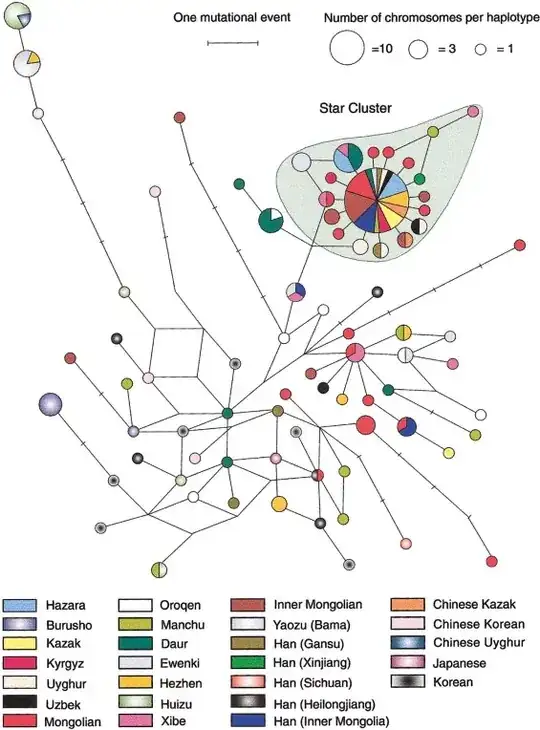
As far as a new Y Adam, this sort of thing nearly happened for men. Just to remind, the Y chromosome is transmitted exclusively from father to son, so a Y Adam would be the only ancestor of all men on the face of the planet.

A national geographic sponsored survey of genomes found that in central asia 8% of all men have the same Y chromosome. Over all humanity, 0.5% of all men have the same Y chromosome. The genetics point to the Mongol Warrior King, Genghis Khan whose campaigns across Asia to the doorstep of Europe included him bedding with one or more different women from the conquered peoples every night, one of whom is reputed to have killed him. Not incidentally killing many men too, eliminating much future competition for his progeny.

Still, all this is a mere fraction of the sort of effect you are talking about. 100% replacement by a single individuals descendants is hard to imagine in less than an extinction like scenario. Or a new race of superbeings coming from a single individual. Hard to imagine given the billions of people on the face of the planet now.

Its a little easier to imagine in the case of a new Adam only because a one man can have hundreds or even thousands of offspring in his lifetime. Even then, Male psychology seems to bring it up more than is rational. Its still extremely improbable (not going to happen).

enter image description here

Its also worth noting that few species have been able to come back from such a small gene pool and number...

Here's a tree of human Y chromosomes. You can see that fat grey blob which are descendants of GK. enter image description here
terdon
  • 12,803
  • 5
  • 46
  • 73
shigeta
  • 28,244
  • 2
  • 60
  • 120
  • Based on the comment to my answer I removed the mention of isolation so I edited out your reference to the part of my answer that no longer exists. – DQdlM Dec 13 '12 at 18:52
  • I was also editing - i think i ran over your changes, but i took the reference to you out. – shigeta Dec 13 '12 at 19:00
  • 3
    This notion seems to conflict with the hypothesis that our current M-Eve was not the only woman alive at the time. Isn't it so that other contemporary women of our M-Eve do have living descendants, just not matrilineal? – molf Dec 14 '12 at 12:39
  • If there were a group of women that were not at all related at the time of origin of the human race, we should see it in the mitochondrial version of the above diagram - more than one tree. It seems as the human race (and speciation) started with just one event. On the other hand its interesting that there are theories that neanderthals and denisovans mated with humans after leaving africa, but it doesn't seem to show up here. http://en.wikipedia.org/wiki/Denisova_hominin#Interbreeding_with_modern_humans – shigeta Dec 14 '12 at 14:19
  • It isn't required that all other women be eliminated from the gene pool but rather that through time the individual lineages of mitochondrial DNA (based on some initial variation at a specified time in the past) go extinct. – DQdlM Dec 14 '12 at 15:48
  • How do you make a single chromosome go extinct while the rest of the chromosomes breed? – shigeta Dec 14 '12 at 17:43
  • 1
    The point is that you do not need to be reduced to a single woman at any point. If there are x different mitochondrial lines extant right now. Through time, the proportion of descendants from each of these lines will vary (n/x) and some lines will go extinct (0/x). Given enough time all lines but one will go extinct (either from selection or drift) and all of the individuals in the population will be the descendants of a single line. Note that background mutation will mean that the extant variation need not decline through time. – DQdlM Dec 14 '12 at 18:51
  • That's true - though I did not really mean say that all the women would need to be removed at the same time, but eventually they would have to exit to achieve the scenario depicted. I think this is what I said though its true not at the top of the entry. This parallel competitive MEve is a lot less likely. I can amend my answer to describe how much less likely that is, although all these scenarios are the stuff of science fiction - more thought exercise than at all likely to happen. – shigeta Dec 14 '12 at 19:21
  • I don't really think it is science fiction as much as a way to think about genetic drift. It is basically just genetic drift in reverse. The MEve is just an estimate of how long it took for drift to eliminate the genetic diversity of the population. – DQdlM Dec 14 '12 at 19:55