14

Why can't just all anti-aromatic systems lose planarity (and hence conjugation) and be non-aromatic like cyclooctatetraene ?

Would they not be more stable that way? Because anti-aromatic systems tend to be highly destabilized.

What can be a good working rule to predict whether an anti-aromatic system will remain anti-aromatic or whether it will somehow manage to lose planarity and become non-aromatic?

pentavalentcarbon
  • 7,488
  • 6
  • 47
  • 78
Abhirikshma
  • 1,906
  • 7
  • 24
  • 40
  • 13
    All the anti-aromatic systems I can think of undergo distortions to avoid it. Can you provide some examples of the systems you are thinking of? – bon Feb 10 '16 at 10:10
  • @bon so you are saying that practically anti-aromatic systems do not exist. – Abhirikshma Feb 10 '16 at 12:54
  • 6
    I think that there is exactly one antiaromatic system (and its derivatives) known to mankind and that is cyclobutadiene — which is too strained to deplanarise in any way so it has to be planar. All other systems distort themselves as far as I know to avoid antiaromaticity — or in some cases such as the cyclopentadienyl cation, don’t even allow formation. – Jan Feb 10 '16 at 20:33
  • @Jan Apparently some cyclobutadiene derivatives are non-planar. http://onlinelibrary.wiley.com/doi/10.1002/anie.198002111/pdf – bon Feb 10 '16 at 21:28
  • 5
    @Jan Doesn't cyclobutadiene avoid being antiaromatic by distorting from a square structure to a rectangular structure with alternating single and double bonds? – ron Dec 13 '16 at 02:44
  • @ron Well yes of course, the structure contains localised bonds. But correct me if I’m wrong: even with differences in bond length, it still has a single pi system and the only reason why it is not a biradical is the lowering of symmetry from $D_\mathrm{4h}$ to $D_\mathrm{2h}$. That still makes it formally antiaromatic imho. – Jan Dec 13 '16 at 23:21
  • https://chemistry.stackexchange.com/questions/57678/is-compound-aromatic-if-it-has-also-anti-aromatic-ring – Mithoron May 12 '17 at 22:40
  • https://chemistry.stackexchange.com/questions/44743/aromaticity-of-1-1-bicycloprop-2-en-1-ylidene-and-1-4-dioxine – Mithoron May 12 '17 at 22:49
  • What about going a bit further, why would an anti-aromatic systems that can distort form in high enough concentrations to be observable to begin with? I assume that if the energies of two molecules are similar and one is anti-aromatic there will be some Boltzmann distribution of states? – pendletonian Jun 21 '17 at 18:45

1 Answers1

7

They do try to escape planarity if possible. As a simple example, consider cyclooctatetraene. It has 8 electrons, which is a non-Huckel number, considering it's a multiple of four, and would correspond to an antiaromatic system, if the ring was planar, and allowed delocalization. However, cyclooctatetraene isn't planar. It's rather "tub-shaped", as seen in this structure here:
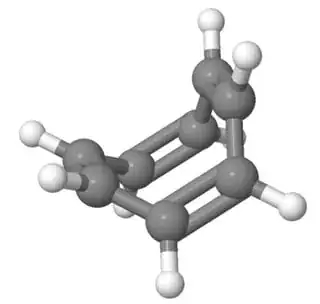
enter image description here

Click the image for interactive 3-D model

The electrons aren't delocalised either. Cyclooctatetraene is known to add bromine, and generally behave like a cyclic polyalkene in many aspects.

The only cases where molecules don't escape planarity is when they cannot. This happens in the case of cyclobutadiene. Such a molecule is so small, it cannot be distorted to such extents. As a result, it remains planar, antiaromatic, and immensely unstable:
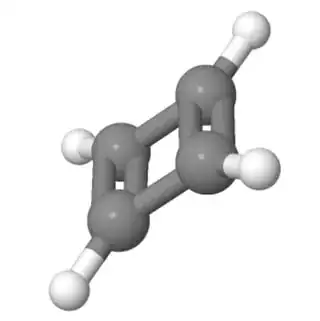
enter image description here

Click the image for interactive 3-D model