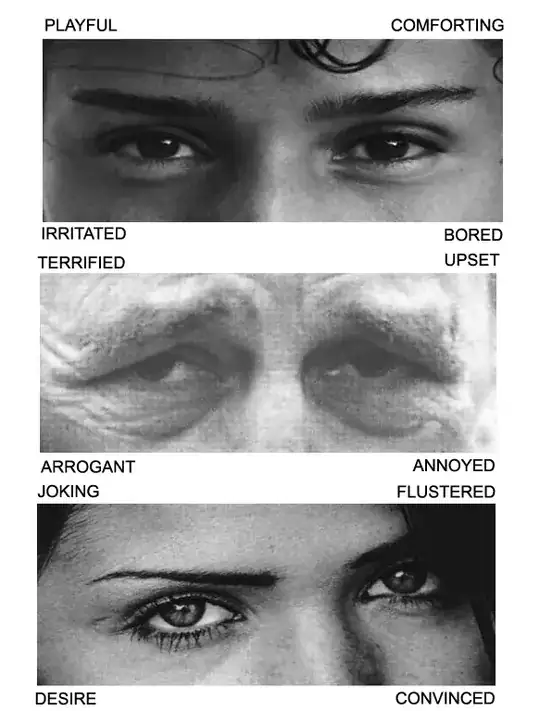
Humans do commonly use the eyes, area around the eyes, and other eye-related information such as movement and orientation to deduce the emotional states of others. What isn't as clear from research examining this capability however, putting aside subjects' confidence in their own skills, is how accurate / valid such assessments actually are.
But it turns out that the eyes alone can be used objectively to determine a wide variety of information about a person's mental state.
A fairly large research sub-field in this area is Pupillometry, the measurement of pupil diameter. Just copying from a Scientific American article:
Scientists have ... used pupillometry to assess everything from
sleepiness, introversion and sexual interest to race
bias, schizophrenia, moral judgment, autism and
depression.
Other research also shows a connection between mental states and eye-related information, such as eye contact and cognitive load, blinking and certain mental disorders related to dopamine, eye movement and memory recall, eye movement and beliefs, and of course, there's crying.
Though humans may not usually use those particular cues, we presumably evolved certain skills to discern emotional states from eyes as a survival mechanism, suggesting that the cues we use are generally valid. For example, fear causes widening of the eyes / increase in exposure of the sclera (white of the eye), that has the evolutionary advantage of increasing peripheral vision, and the side-effect of alerting others around us to danger, and even to where the danger is. Even infants are found to be quite skilled at discerning emotional state from the sclera, suggesting a genetic origin.
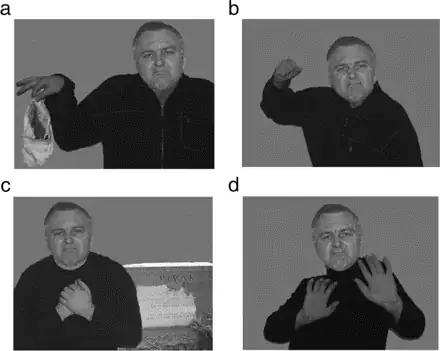
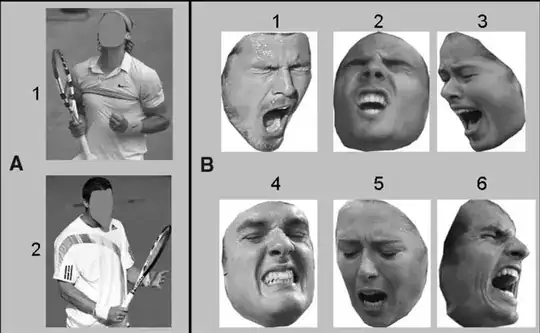
However in general, physical or physiological cues are only part of the picture, as other context information is also crucial for correct attribution of emotional states. So in practice, eyes do not generally provide sufficient information for determining emotional state - humans use a lot of additional context information for that.