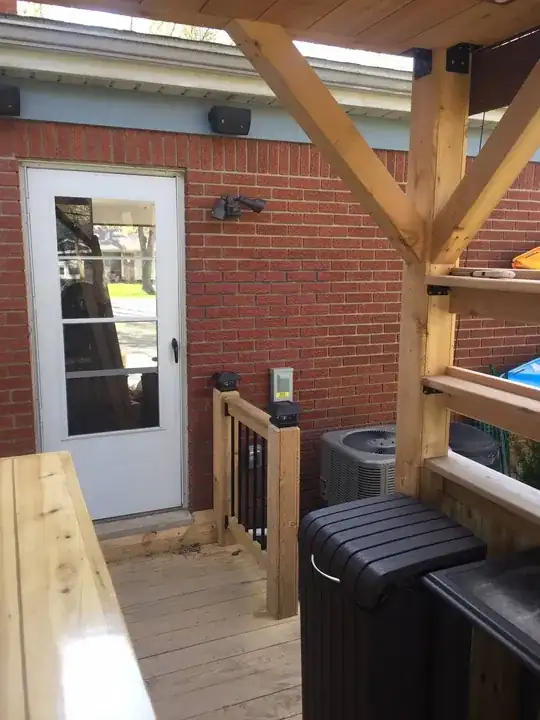
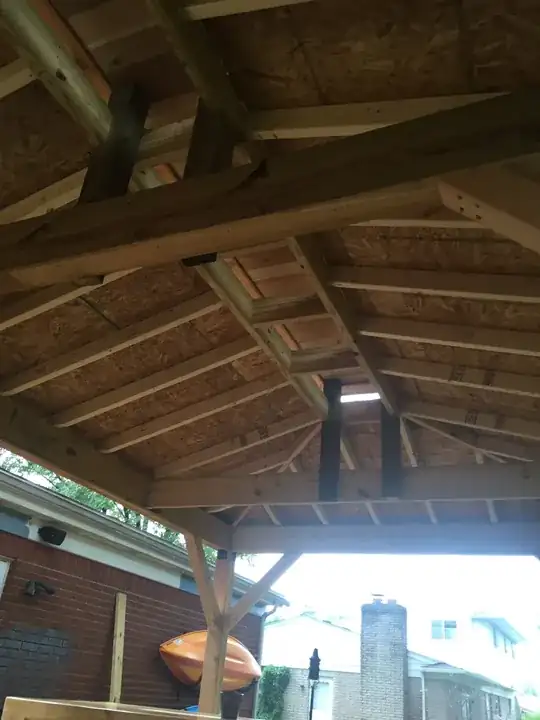
Conduit's not what you want here
Flexible conduit (of any type) can't be run between buildings like this as it violates the support rules (you need supports every 3', and you can't have that here).
Instead, what you want to do is run a galvanized, aluminum-clad, or copper-clad steel messenger wire between the two structures, and then use field lashings or cable saddle rings to attach an outdoor rated (sunlight resistant) CL2 or CL3 speaker cable to it. This falls under Article 396 of the NEC, and in particular the line in table 396.10(A) that states "Other factory-assembled, multiconductor control, signal, or power cables that are identified for the use" are allowed for messenger-supported wiring installations.
It is important to provide enough slack in the messenger and cable to let the messenger adopt a natural catenary curve (instead of having it taut between structures or excessively slack/drooping, check a sag and tension chart for details) in order to take up structural motion and wind deflections, as you indicate, and also to attach the cable to the messenger in a way that will withstand the test of time (usually, a thinner lashing wire is wound around the combination of cable and messenger, or the cable is threaded through cable saddles that have been attached to the messenger wire). You'll also need to ground the messenger wire itself at at least one end (probably using a split bolt on the messenger with a ground wire or Bare Armored Ground cable going back to a nearby mains box that a ground can be tapped at).