32

One of the double sockets in our garage needed replacing (damaged after a washing pole hit it) - a pretty trivial job that I'd done before. So I flipped the MCB for the ring main, used a non-contact voltage tester to check nothing was there, and set to work. I disconnected the old socket fine, and was lining the cables up to fit into the new socket when... ow.

My finger bridged the live and earth pins, and suffice to say the live wire was very much alive. Bar a few finger spasms I was fine fortunately, and believe me I realise I was very lucky in that respect (I'm in the UK, so that was 240V.) Before finishing the job I then shut off the entire property's electrics - I was taking no more chances.

Further inspection confirmed two things I immediately suspected at this point - the MCB in the garage (installed before we moved into the house) was shutting off power via the neutral, not the live, and the voltage tester was dodgy (I had tested it on the same socket earlier and it seemed fine, further testing showed it presumably had a loose connection internally and only worked sporadically.) Needless to say it's now in the bin, and an electrician has been called to sort the MCB and check the rest of the house for similar issues.

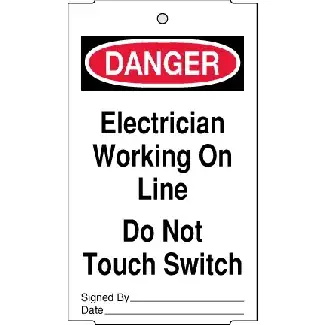
Unsurprisingly this has shaken me up a bit - I would say I'm a rather safety conscious person, and in this case thought I'd done all the checks properly (including taping over the relevant trip switch to ensure no-one flipped it back on while I was working.) In some ways I can't help feeling I was unlucky that the MCB was wired by a cowboy, in combination with the voltage tester failing in the way that it did, at the time that it did. However, I'm not one to solely blame tools - clearly some, if not most of the blame here lies with myself also.

So in short, what should I have done differently - and was I primarily being stupid, or really quite unlucky?

user24536
  • 321
  • 3
  • 3
  • 12
    I have a habit that if I'm sure that something is not live and I'm about to touch it, then before that I connect the live&earth pins with whatever (insulated handle) tool I have in hand. It's quick enough to do it by habit even in cases where you wouldn't pull out a tester, but if you're about to make a mistake then it shows you that without risk of life. – Peteris Aug 17 '14 at 09:03
  • 3
    If you read the directions that come with non-contact testers, it says to check it for proper operation on a live circuit. So what I do is push the button near a live circuit, and while holding it bring it to the circuit under test, then back to the live one. – Brad Gilbert Aug 17 '14 at 15:16
  • 7
    #1 Rule: The wire is always live. – Phonics The Hedgehog Aug 18 '14 at 02:12
  • I've made this kind of mistake before. Thinking it was disconnected when it wasn't. I had a tingle in my fingers and realised it was very much live! fortunately I was OK. That's why I now treat all wiring like it's always live. – hookenz Aug 18 '14 at 03:20
  • @Peteris if you're wrong, and it's a 30A circuit you can easily blow the tip off a screwdriver that way - I've seen a decent sized chunk embed itself in a brick wall - so I'd prefer a contact mains-testing screwdriver, though I agree with your sentiment. – Chris H Aug 18 '14 at 08:32
  • 2
    I've been shocked too. All I was doing was taking the cord out of the socket so I could plug something else in but it was pretty difficult getting it out and somehow one of my fingers managed to touch the steel bit while it was still half plugged-in, the shock lasted for a good 4-5 seconds. I was really jittery (all over my body) for a few minutes, but other than the jittery feeling I felt absolutely fine. This has happened a few times over the years, but not in a long time. – jay_t55 Aug 18 '14 at 10:38
  • 2
    As someone who has been through the same situation as Aeron (but shorter duration), I can confirm that, yes, it's unpleasant, and yes, it is frighteningly common, but no, it's not an instant fatality. Most likely, it didn't go deep enough to hit your heart, probably just the muscles of your arms. it's uncomfortable for a few minutes after it happens, but it doesn't kill if you're lucky. – Nzall Aug 18 '14 at 12:28
  • 1
    @NateKerkhofs however if the other side of your body is well grounded (barefoot on concrete, or holding a metal pipe for support) at the time it can easily be fatal. So despite it usually being just unpleasant, we should be extra careful to not let it happen at all. I hate north america's plug design - there are many safer designs but we are stuck with once you can easily get shocked by. – Grant Aug 18 '14 at 21:14
  • @user24536 if you're still around it would be good to mark one of the responses to your question as an answer – pcdev Feb 19 '18 at 23:13
  • 1
    For those concerned, if the shock is going to kill you, it'll kill you on the spot (stops your heart). You won't suddenly drop dead afterwards. – Nelson Mar 02 '20 at 02:35
  • I had an electric shock as a teenager - I grabbed the cable of a plug-in light, and the rubber insulation turned out to be broken exactly where my fingers were. My fingers bent involuntarily, making the grip stronger and I am still alive only because my mum managed to pull the plug out. It is unforgettable experience, so I always shut off the entire property electrics before doing anything. I also make sure that nobody would turn it on by mistake while I am working - if there are old style breakers (the ones with a wire), I pull them out and keep them in my pocket. In my current house there ar – greenfingers Aug 18 '14 at 09:03
  • The path that electricity takes is crucial. In this case, it went from 'live' through the flesh of a finger to earth. Had it gone from live, through the flesh of a finger, across to the other hand, holding something conductive - a metal pipe, etc - particularly one earthed on purpose (water, gas) then to earth, death would probably follow - the current going through the heart, stopping it on the way. The few seconds it takes are often not enough to let go - muscles tighten the hand round the pipe. Turn off everything! – Tim Jun 16 '21 at 08:42

6 Answers6

24

The paranoid way to use a non contact voltage tester is:

  • Test that outlet shows as live
  • Flip breaker
  • test that outlet shows as dead
  • Test a different outlet that should still be live

The last step is what would have saved you a shock here - its to check that your tester didn't die while you were flipping the breaker, and that you haven't done anything silly like forgetting to turn it on.

Though if it were a loose connection you still could be very unlucky and have it pass all those tests with the outlet still live.

Grant
  • 5,659
  • 4
  • 23
  • 40
  • 4
    This is indeed the correct way of doing it. Verify the change, then verify the tool. – SQB Aug 17 '14 at 12:00
  • I would add one more step: STILL treat bare wires as if they are live and avoid bodily contact. The tester could be failing intermittently (as the OP suggested his was). The above test is definitely good but still not infallible. – pcdev Feb 19 '18 at 23:11
  • 2
    If I may offer some additional advice - once you've done all of these tests, your first form of contact with the wire should be with the back of your finger, preferably between the knuckle and the first joint while your hand is loosely balled into a fist. If you get a shock your hand will convulse away from the wire, and since your hand is already balled up your fingers can't easily catch on other wires and pull at them. It's also a relatively low-catch area of skin that heals quickly. Much better than getting shocked while pinching the bare wire. – Polynomial Nov 20 '18 at 15:23
  • I always hold the button down and bring it by a cord: beep. Keep the button down (and do not jar the NCV) and bring it to the suspect: beep (or no beep). Still having the button held down, bring it back to the cord: beep. If you jar it and get a beep, start over, which begins with first testing it while it's on. Then lastly, actually check it for potential with a solenoid voltage tester. – Mazura Nov 01 '19 at 02:06
16

Step 1

1. Test.


Step 2

2. Confirm.


enter image description here

3. Do work.


Step 4

4. Check your work.


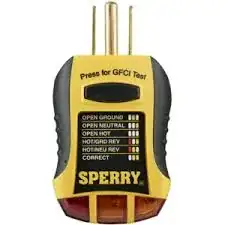
Always test the tester. (Preferably with a different tester.) NCV's should only be used to confirm an outlet should work, NOT that it is dead. They are also nice for locating CBs if you want to play the flip on/off game, though not to be used for confirmation of that either. Item 4, the outlet tester, would have alerted you to the live wire and it's incorrect wiring. It's a common courtesy in my crew to ask "Did you check it with a wiggy yet?" (item 2) for their own safety as they begin. We also never defer to each other, check it again yourself.

Once I have a box open I check all around with a NCV again. Most likely there are other wires from other circuits and depending on the situation those get shut-off too.


A note on NCVs:

They will sometimes pick up a strong enough induced current (from proximity to live wires) to give you a false positive. Again, non-contact voltage testers are best used to see if an outlet should be working, at a glance, NOT to confirm that it is dead.

More on Stack Exchange: Is a negative reading from a non-contact voltage detector sufficient?

Mazura
  • 13,377
  • 1
  • 18
  • 56
  • 1
    I agree with all of this but am wondering if they make a plug in tester for 240v outlet configurations used in the UK and do they have gfci protection for them? – user24125 Aug 17 '14 at 03:03
  • @user24125 I have no experience with UK power. A quick search found this: http://www.earthingoz.com.au/online-store/accessories/uk-outlet-tester I never had one so nifty so I assume the GFCI 'test' function on the one pictured just shorts the wires the same way the outlets button does, so you can redundantly test the outlet. Check your local giant hardware store. – Mazura Aug 17 '14 at 03:45
  • 1
    The GFCI test button shorts the live conductor to the ground conductor through a resistor. The point of the resistor is to provide just enough unbalanced current to trip the GFCI, but not enough to trip the breaker. Mine has a resistor that reads just under 18K ohms, which works out to be about 0.006 amps. – Brad Gilbert Aug 17 '14 at 15:37
  • 1
    @user24125 I have a similar socket tester for UK sockets, a few quid from maplin years ago. It's handy for checking the polarity of sockets on campsite pitches - in France they're backwards at least 1/3 of the time, but if working in the power circuit I plug that in to the appropriate socket and can see what's going on as I walk up to it. I still check with another tool though (often a multimeter as soon as the wires are exposed). I'm lucky in that only the labelling is dodgy here, not the wiring. – Chris H Aug 18 '14 at 08:30
  • I wonder what people would think of an NCV design which, when a button was pushed, would emit a "smooth" tone in the absence of AC or a "warbly" one in its absence? Such a device could be made in such a fashion that a "smooth" tone would pretty well imply the absence of AC, and almost any possible failure mode would cause it to either warble or not emit any sound at all. – supercat Oct 18 '14 at 23:00
  • @supercat, an interesting idea, however if part of the tiny circuit board fails, the tone may not change. That's why I also use a solenoid type voltage tester, I don't trust NCV's anyway. – Mazura Oct 18 '14 at 23:16
  • @Mazura: The detectors work by sensing a capacitively-coupled voltage on a probe. If one of the legs of a through-hole resistor is used for the probe, then the only way the tone would be produced would be if both legs were soldered to the board. If the legs shorted together, or if either leg failed, the device wouldn't produce the proper tone. Not to discourage prudent behavior, but I think a more active confirmation that the probe is actually working would be a good thing. – supercat Oct 18 '14 at 23:37
  • @user24125 - U.K. plug ins are certainly available. I carried and used one at every gig I played for 50-odd yrs. Occasionally, I found a socket on stage that I declared 'out of bounds'. Usually no earth, or live/neutral crossed. In fact the tester was permanently plugged in to the first set of sockets the band plugged in to connect amps to. – Tim Jun 16 '21 at 08:50
7

Unlucky to have come across a dodgy installation. What follows is a US experience, same voltage. We lived in a house dating from "Rural Electrification" so that might give you an idea of the age of the fuse panel. There was this coiled bit of Romex hanging off a nail in the eaves, bare clipped off ends, that was hot. After pulling all the fuses and the Range and Pump 220V fuse blocks, it still was hot. We had to call the power company to come pull the meter as it was wired for who knows what ungodly reason, into the input lugs to the fuse panel.

The experience shows why I prefer a standard contact voltmeter for verification, two different methods for cross-check. I love the non-contacts for ease of use.

Fiasco Labs
  • 11,340
  • 1
  • 27
  • 44
3

Always verify the non-contact voltage tester is working properly, before trusting it (this is true for any tool, I guess). Aside from that, it just sounds like you were unlucky.

This is why it's important to know what you're doing, before attempting any DIY project. The person before you obviously did not, and the end result could have been your death (luckily it wasn't).

Tester101
  • 131,561
  • 78
  • 320
  • 610
  • Agree completely - I like to think I'm more than comfortable with a variety of simple tasks, but would never proceed with something I wasn't confident with. – user24536 Aug 16 '14 at 13:03
1

and believe me I realise I was very lucky in that respect

Most people I've spoken to who have worked with electricity have had at least a few shocks from the mains or mains-level voltages in their lives (I must be up to at least 5 or so by now) yet only a handful of electrocutions are reported in the UK each year. I must conclude from this that electric shocks are usually not fatal.

Of course "usually not fatal" is not a good basis for a safety policy. You should still do everything you can to avoid further shocks.

So in short, what should I have done differently

Non-contact voltage testers should be viewed as indicative only.

The professional electrician approach in the UK is to use a dedicated two-pole voltage testing device, combined with a proving unit. The steps would be

  1. Either test the circuit is live before de-energising or prove the tester is good on a proving unit or a known live supply.
  2. De-energise and lock off the circuit if it hasn't already been done
  3. Test between ALL COMBINATIONS of conductors. i.e. on a single phase supply live to neutral, live to earth and neutral to earth.
  4. Use the proving unit or known live supply again to prove the tester works.

It's a tricky question what diyers should do though, the procedure used by electricians works well for them but the equipment is expensive and the procedure is not without risks of it's own. Personally I would say the most important aspect is testing between all combinations of conductors. Using a multimeter that hasn't been "proved" is obviously less certain than using a dedicated tester that has been proved but it's still a lot better than not testing at all.

I would say your other mistake is buying a property and not getting the electrics checked out. Dodgy DIY wiring is all too common and you want to know about it before it bites you.

Peter Green
  • 5,066
  • 12
  • 28
1

I use a multimeter and check all three pairs (live-neutral, live-ground, and neutral-ground) before doing anything. This lets me catch bad wiring, as well as things like a leak to ground that may not have a high enough voltage to trigger an NCV or other yes/no tester.

Mark
  • 591
  • 2
  • 10
  • 20