6

enter image description here

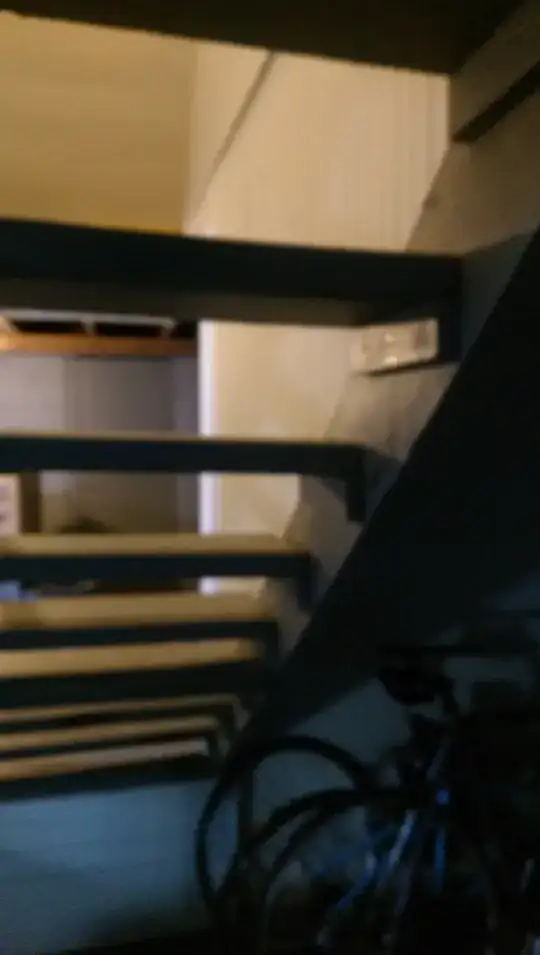
It looks to me like it's just a support piece nailed into the wall with a 2x4 running across as a step. They go down to our unfinished basement and a few of them are starting to fail.

Anything I should be aware of?

Tester101
  • 131,561
  • 78
  • 320
  • 610
Eric
  • 123
  • 1
  • 1
  • 5
  • 4
    My eyes must be going bad. The picture looks fuzzy. – Tyler Durden Feb 23 '15 at 21:57
  • Not your eyes, the pic is kinda fuzzy. – Eric Feb 23 '15 at 22:00
  • 4
    How are they failing? – CoAstroGeek Feb 23 '15 at 22:09
  • 1
    Some of the supports are pulling out from the wall and a few steps are cracked. – Eric Feb 23 '15 at 22:11
  • 2
    I'd prefer to see the cleats (blocks under the ends of the treads) screwed rather then nailed to the stringers (angled side boards). That should stop the pulling out. Are the cleats pieces of 2x4? The treads should likely be toenailed into the stringer also. As far as the cracks - really depends on how bad they are. – CoAstroGeek Feb 23 '15 at 22:31
  • 2
    @CoAstroGeek Screws have less shear strength than nails, and since most of the stress on the fasteners will be shear stress, nails are the better choice. A combination is probably the "best" choice, but I don't envision many builders going through the trouble. – Tester101 Feb 24 '15 at 04:10
  • Why wouldn't they go through the trouble? Doesn't seem like much trouble to put in a couple extra screws. Thanks for the advice! – Eric Feb 24 '15 at 15:19
  • 1
    @Tester101 - agree for typical screws like deck screws or such. I would use something like those headlok screws or small lags I guess. In any case, there's enough area there that you can put in enough fasteners that shear failure should never be a problem. Glue it while you're at it. – CoAstroGeek Feb 24 '15 at 16:23
  • 1
    @Eric The guy building these stairs had a hammer and nails in his tool belt. If he also had a drill motor and screws, his pants would fall down. Pounding a couple nails takes a couple seconds. Pounding a couple nails, then driving a couple screws takes longer. Builders don't like spending more time then they have to on things, since; as they say, time is money. – Tester101 Feb 24 '15 at 17:08
  • 1
    Makes sense. I think I'll spend the extra minute it will take to add some screws. – Eric Feb 24 '15 at 17:10

2 Answers2

2

If the cleats supporting the steps are solid and haven't deteriorated, use 3 inch course-thread screws to re-secure them to the stair stringers (the long outer sections that span from the bottom to the landing.

If you are in doubt as to the condition of the cleats replace them. I'd use any 2 x stock cut a bit longer than the width of the step. Install it so the cleat's edge is recessed back from the step's edge. From the looks of your foggy photo it appears your steps are 2 x ? stock. If they are in need of replacement (and can't be repaired) replace with similar dimensioned wood.

Also you might want to consider if there are several steps and/or cleats to be replaced is to install a third stringer between the existing ones. They can be found sometimes pre cut. And it isn't that hard to cut one from a length of 2 x 10 or 12 Douglas fir.

isherwood
  • 137,324
  • 8
  • 170
  • 404
ojait
  • 11,012
  • 3
  • 13
  • 36
  • Cutting stair stringers is about as hard as it gets in rough carpentry. IIRC, no tread can deviate more than 3/8" from all of the other treads (including the landings) or it won't meet code. Last time I made one, it was modeled on a computer and utilized giant, printed templates. – Mazura Sep 08 '15 at 01:27
  • @Mazura- wow I always found them fairly easy to step off with a square and the right measurements. But maybe I should have considered the OP's expertise more. – ojait Sep 08 '15 at 01:45
  • In my defense, it was a triple winder, but I don't enjoy making them at all, any which way. The level of difficulty involved is akin to not pre-hung doors, similar to the reasons why you can buy pre-cut stringers. – Mazura Sep 08 '15 at 02:11
-8

Yes, what you should be aware of is that the guy who built these stairs is a moron. You cannot build stairs like this.

Get a book like Building Stairs (by Pros for Pros) so you know what you are doing.

-------------------------------- Response to the Comments

First to the OP: if you want to fix your stairs right, get a book like I have linked and do what it says.

To the would-be stair builders below who seem to think cleated stairs are a good idea:

Stairs are like furniture; they have to hold together. Trying to use $100 in bolts is not going to save you. Wood bends and twists, especially the soft wood used in OP's construction. You could add 10 pounds of bolts to that thing and it will still look like a Bonsai tree in 10 years. Trying to secure a 30 inch tread to a half inch wooden cleat is just not a good idea that will not work in ANY scenario no matter how many bolts and screws you use. Sooner or later somebody is going to be carring a 19" TV down there, the tread will bend and collapse and they will fall.

Unfortunately, I can't do a Vulcan mind meld and make you understand why softwood stringers with softwood treads and softwood cleats will pull apart over time. I suggest reading a book on cabinetry. To hold wood together you have to bind it in every direction properly. Pounding in a few nails or screws to even a 1" hardwood cleat is not going to do that. A 1/2" pine cleat is a joke. Softwood stringers with only a one-dimensional fastening (no risers) will always bow and twist. Even if you use expensive, heavy duty steel angles, (obviously not the case here) they will still twist and fail eventually.

Can you engineer stairs with cleats? Yes, with enough steel and a proper two-dimensional design , it is possible to create permanent stairs using cleats. THE OP IS NOT A STRUCTURAL ENGINEER, SO HE IS NOT GOING TO DO THAT. The proper thing to do is TO READ THE BOOK I LINKED and do what it says.

Tyler Durden
  • 6,889
  • 10
  • 53
  • 101
  • 6
    Nothing wrong with those stairs for the purpose (accessing an unfinished basement). Millions of homes have something similar. – CoAstroGeek Feb 23 '15 at 22:11
  • So what's wrong with it for the specified use? – CoAstroGeek Feb 23 '15 at 22:44
  • 6
    @TylerDurden Can you cite what the issue with these is, specifically? I was inclined to agree with you, until I went searching for code and found that attaching treads using cleats is acceptable (though best practice is to glue and screw). As far as I can see, the IRC only states live load requirements (and tread/riser dimensions). Can anyone cite specific relevant IRC saying this is allowed or not allowed? – gregmac Feb 23 '15 at 22:51
  • @gregmac Code and good construction are two different things. I would recommend reading the above linked book. Stairs are like a piece of furniture; they need to hold together over time even though the wood is shrinking and expanding constantly; the stairs depicted in the above photograph will not hold together--as the OP is finding out. – Tyler Durden Feb 23 '15 at 23:01
  • 6
    There is absolutely nothing wrong with those stairs. In many countries they are the norm and in some the only thing I have seen. I prefer to see some heavier bolts during this construction and always better to see heavy brackets instead of a 1x but I have literally never heard of something like this failing. Just because the traditional method provides more support doesn't mean it would ever be needed. I mean what is the load rating that would ever cause this to fail? – DMoore Feb 23 '15 at 23:02
  • 1
    @DMoore Its not a matter of "load"; its a matter of jointing. The kind of "stairs" shown in the photo will literally come apart at the seams eventually even if noone uses them.--- AS THE OP HAS SAYS THEY ARE ALREADY DOING> – Tyler Durden Feb 23 '15 at 23:04
  • Which bolts would fix... – DMoore Feb 23 '15 at 23:09
  • 9
    If they're done right with good materials, a cleat & tread staircase will last as long as the house ever will. I've seen stairs like this in a 100+ year old homes and barns. I've seen new construction use this recently, though with metal cleats and OSB treads - it's all going to be boxed in, carpeted and drywalled on most new homes anyway. When's the last time you saw an open staircase in your typical mid-range home? I've also seen a notch cut stringer split. Given the quality of large dimensional lumber any more, I think I'd prefer this method if the design allowed. – CoAstroGeek Feb 23 '15 at 23:18
  • 4
    While you are correct that "carpenter stairs" are better than "builder stairs". Stairs built in this fashion have lasted for a long time, and are fairly common. Stairs like these are easy and fast to build, so they are preferred by builders. If given the choice, it's "better" to build stairs with notched stringers. However, it will take longer and cost more. – Tester101 Feb 24 '15 at 04:19
  • 3
    I can assure you, the basement stairs in my friends 1904 home don't look like a bonsai tree, nor do the ones I helped my dad build in his shop 30 years ago. You can do a good job or a bad job with either design. The fact that the OP's were not done well initially doesn't mean that the design is garbage. And fixing his problem is pretty straight forward. You're suggestion of "half inch wooden cleat" is clearly absurd and leads me to believe you either have no idea what you're talking about, or are being intentionally provocative. – CoAstroGeek Feb 24 '15 at 16:43
  • @CoAstroGeek 1/2" cleats is what he has now. – Tyler Durden Feb 24 '15 at 16:55
  • 2
    Not a great picture, but it doesn't look like 1/2" to me. – CoAstroGeek Feb 24 '15 at 16:59
  • Cabinetry and carpentry (even finish carpentry) are different skills -- and historically were different guilds. which may explain some of the arguments. Carpentry is practical engineering; if it's robust enough for the intended application and minimizes cost (including cost of man-hours), it's a good solution. Cabinetry is more concerned with finding the most attractive solutions and making them to last. Example: cabinetmakers put a lot of work into controlling and allowing for wood movement; carpenters just use nails, which will bend enough to let the wood move. What's "proper"? It Depends. – keshlam Sep 07 '15 at 21:31
  • 2
    I think you are getting down votes because your answer is essentially 'go read a book' – n00b Oct 07 '15 at 20:58