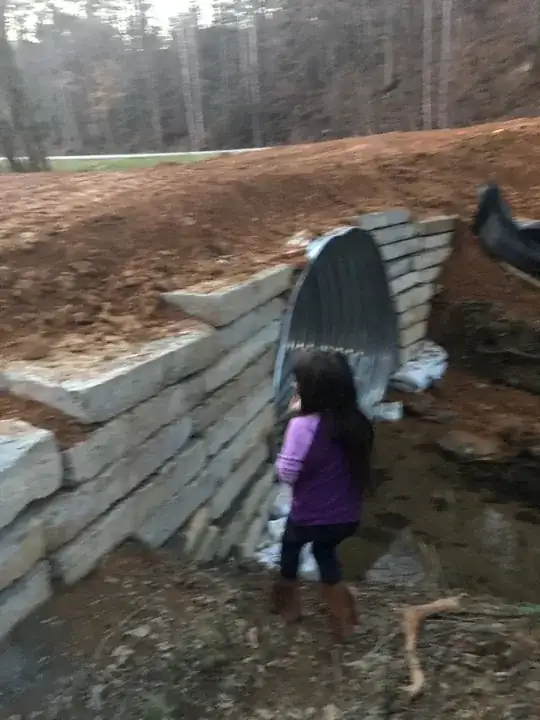
A friend is building a driveway over a stream in rural Tennessee and send a photo of the progress. is there anything wrong in the photo?
As a layman it looks to me that the stone wall doesn't go all the way to the top. What do you think?
[ ]
]
A friend is building a driveway over a stream in rural Tennessee and send a photo of the progress. is there anything wrong in the photo?
As a layman it looks to me that the stone wall doesn't go all the way to the top. What do you think?
[]

So?
If the culvert was long enough, there'd be no need for a wall at all - that's how they are typically installed on most public roads - long steel pipe, pile of dirt wide enough for a road, natural slope to either side. More pipe and more dirt is less expensive than building a retaining wall from the road department's point of view, and it also has fewer ways to fail. If the pipe is long enough and the pile of dirt wide enough, it also solves the next issue:
This one is obviously not completed yet, and most people with something that precipitous at the edge of their driveway will end up needing a wall or guardrail above driveway level to keep their home insurance company (if not themselves) happy, as driving off the edge makes for expensive insurance claims.

I would have expected that the purpose of the wall is to reduce or prevent erosion of the roadway support. Considering the height of the culvert, one might expect a large volume and high rate of flow of water to be running through the waterway. If the flow rate and volume reaches the current top of the wall, an extra layer of bricks may not matter.
