1

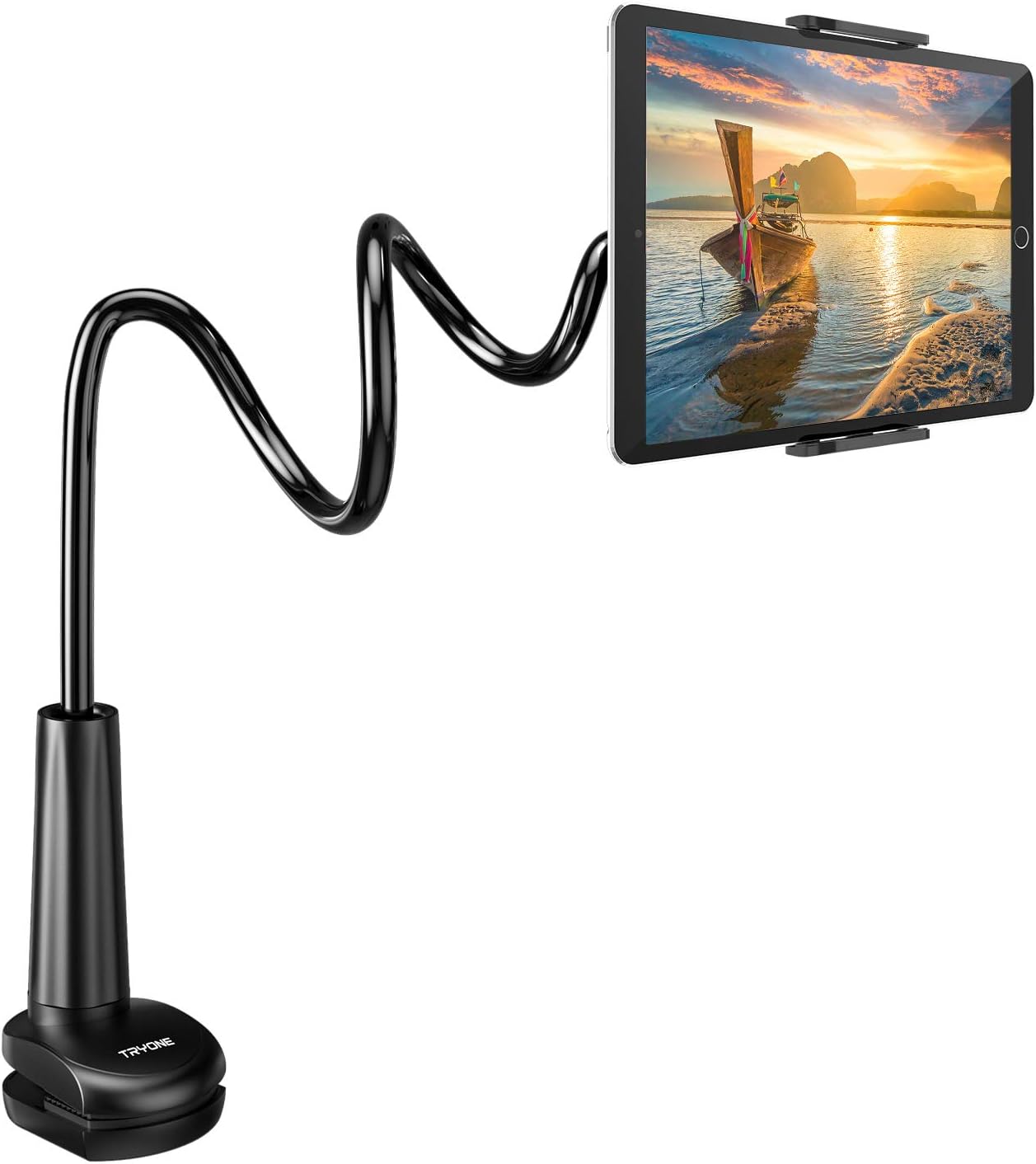
Can you suggest the basic principles for optimal neck adjustment of a gooseneck stand such as the one in the image? I'm looking for the curvature that will offer greatest mobility and stability, while also being versatile for different positionings - that is, a curvature that allows the stand to be used in different positions with minimal adjustment. It would be an added benefit if it's aesthetically pleasing. Finally, can you suggest the easiest way to achieve this curve of the gooseneck with readily available household tools?

Is this an instance of a more general problem type? If so, could you point it out and briefly explain the basic principles it obeys? I'm mostly looking for a conceptual definition. The math would be interesting but secondary from my perspective. Thank you!

https://images-na.ssl-images-amazon.com/images/I/61pnnei-pAL._AC_SL1500_.jpg

gooseneck stand

alstax
  • 11
  • 1
  • 1
    What's your goosneck material, and what are it's properties? What variables can you manipulate, for example length, diameter? What numerical criteria will you use to optimize? – Drew Jul 12 '21 at 23:51
  • The material is a metal wire 1 m long covered in plastic sheath. I don't have its mathematical properties but it's sturdy enough to stay in place and hold a weight of 1-2 lb, while pliable enough to be manipulated by using two hands. Length and diameter of the wire are fixed. What I can manipulate is it's shape / curvature. I'm looking for the optimal and simplest wire shape to give the most mobility to the device being held (and ideally with some positive aesthetic properties). – alstax Jul 15 '21 at 13:21

1 Answers1

1

Goosenecks use either a series of friction joints or some sort of wire member that will hold its shape when bent. If a vertical force is applied to the screen in your picture then maximum torque will occur at the furthest point from the screen and it will flex there.

I'm looking for the curvature that will offer greatest mobility and stability, while also being versatile for different positionings - that is, a curvature that allows the stand to be used in different positions with minimal adjustment.

The minimal adjustment is just move the screen from one point to another. The curvature will be determined by the torque experienced at each joint and their relative frictions.

It would be an added benefit if it's aesthetically pleasing.

To do that you will probably have to manipulate the joints at various points along the gooseneck. This will be a two-hand operation.

Finally, can you suggest the easiest way to achieve this curve of the gooseneck with readily available household tools?

Hands and eyes should be adequate.

Transistor
  • 10,741
  • 2
  • 21
  • 31
  • It is a single wire member covered in plastic, without any joints. Both ends of the wire are actually weak points and bending there is not recommended. – alstax Jul 15 '21 at 13:23
  • I'm looking for the optimal curvature of the wire. Can this be determined based on principles? I notice that adjustments of the screen are basically rotations around an axis. And I noticed that certain wire setups allow much more rotation freedom than others, ie. easier movement in different directions with only minimal wire adjustments. Is there an optimal wire shape (such as a spiral, a z shape, etc) to maximize rotational freedom & why does it work? What are the principles behind this kind of problem? – alstax Jul 15 '21 at 13:32