I've tried searching here and in the WRI documentation, but I haven't found what I'm looking for in either place.
I'm defining a dx operator to act as a shorthand for D[#,x], based on this question.
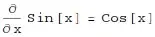
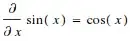
In my case, I want Mathematica to produce an output form with the text d/dx expression = [...], where by [...] I mean the actual symbolic meaning of my dx operator (i.e., D[#, x]).
I have tried this:
Format[dx[a_] := "\!\(\*FractionBox[\(d\), \(dx\)]\)" a "=" D[a, x]]
I've also tried
Format[dx[#], TraditionalForm] :=
  DisplayForm[
    RowBox[{FractionBox["\DifferentialD]", "\[DifferentialD]x"],
    #, "=", D[#, x]}]];
and various other similar things, none of which produce the correct expression.
I would appreciate help with getting this right.



MakeBoxes[#]&@D[a, x]inserts evaluatedD[a, x]intoMakeBoxes.Evaluatedoesn't work here becauseMakeBoxeshasHoldAllCompleteattribute. – ybeltukov Oct 07 '13 at 13:40