4

A number is 5-smooth if its only prime factors are 2, 3 or 5.

Example:

1, 2, 3, 4, 5, 6, 8, 9, 10, 12, 15, …

Interesting thing is that as they become larger and larger, they are sparser and sparser, with respect to all natural numbers...

Now, how to make a visual illustration of that fact (becoming sparser)?

I was thinking of lets say a 300 x 1000 rectangle, where each pixel means a natural number, and red is 5-smooth, blue is otherwise. This would work for first 300,000 numbers.

Here is a collection of programs in various language regarding 5-smooth numbers: link

Including this:

HammingList[N_] := 
  Module[{A, B, C}, 
    {A, B, C} = 
      (N^(1/3))*{2.8054745679851933, 1.7700573778298891, 1.2082521307023026} - {1, 1, 1};
    Take[Sort @ Flatten @ 
      Table[2^x * 3^y * 5^z , 
        {x, 0, A}, {y, 0, (-B/A)*x + B}, {z, 0, C - (C/A)*x - (C/B)*y}],
      N]];

and

HammingList[20]
 {1, 2, 3, 4, 5, 6, 8, 9, 10, 12, 15, 16, 18, 20, 24, 25, 27, 30, 32, 36}
HammingList[1691] // Last
2125764000
HammingList[1000000] // Last
519312780448388736089589843750000000000000000000000000000000000000000000000000000000

Appreciate any idea and/or insight.

m_goldberg
  • 107,779
  • 16
  • 103
  • 257
VividD
  • 3,660
  • 4
  • 26
  • 42
  • What exactly are asking us? You already have a generator written in Mathematica, albeit with bad variable names. You have a concept of how you to display the results, a raster of red and blue pixels -- that's not hard to generate. So what specifically do want from us? – m_goldberg May 10 '14 at 00:23

4 Answers4

6

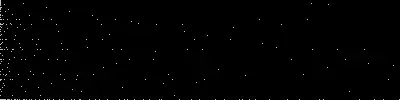
Here's some code which produces an image depicting the density of 5-smooth numbers with bright pixels on a dark background, with higher numbers on the right side of the image.

size = 200;
Image @ Transpose @ 
  Partition[
    If[Max @ First @ Transpose @ FactorInteger @ # <= 5, 0.75, 0] & /@ 
      Range[size^2], 
    size/2]

enter image description here

If an integer satisfies the condition that its largest prime factor is less than or equal to 5, it is assigned a value of 0.75 (light gray). Otherwise, it is assigned 0 (black). The first size^2 positive integers are represented in the image.

Kuba
  • 136,707
  • 13
  • 279
  • 740
phosgene
  • 400
  • 1
  • 8
3

This is not answer; it is an extended comment on user2790167's answer.

I think the results from phosgene's code would render the data better if it used color rather than gray-scale. The OP asked for red and blue, but this has contrast problems about as severe as phosgene's answer. I propose using fully saturated red and a very light (desaturated) sky blue.

size = 200;
red = {1, 0, 0};
lightBlue = {.85, .93, 1};

Image @ Transpose@
  Partition[
    If[Max @ First @ Transpose @ FactorInteger @ # <= 5, red, lightBlue] & /@ 
      Range[size^2], 
    size/2]

image

m_goldberg
  • 107,779
  • 16
  • 103
  • 257
3

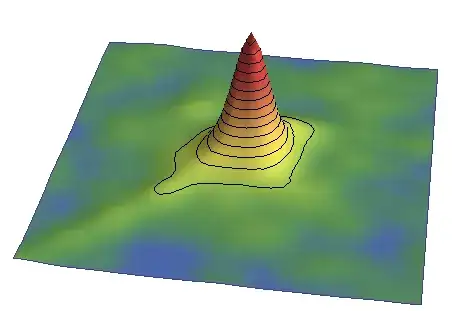
What if you made a number spiral similar to the prime spiral of Stanislaw Ulam? This transforms the 1D distribution of Hamming numbers into a 2D distribution. Note that kSmoothSpiral generalizes to any k-smooth number.

NumberSpiral[n_Integer] :=
   Block[{m = Floor[N[Sqrt[n]]]},
      If[
         EvenQ[Floor[2.0*Sqrt[n]]],
         {(-1)^m*((n - m*(m + 1)) + Ceiling[m/2]), (-1)^m*(-Ceiling[m/2])},
         {(-1)^m*(Ceiling[m/2]), (-1)^m*((n - m*(m + 1)) - Ceiling[m/2])}
      ]]

kSmoothSpiral[n_Integer, k_Integer] :=
   With[{r = Range[0, n]},
      Map[NumberSpiral, 
      Pick[r, UnitStep[k - Map[Max, FactorInteger[r][[All, All, 1]]]], 1]]
   ]

A 2D histogram shows how the density of smooth numbers drops off radially.

SmoothHistogram3D[kSmoothSpiral[1000000,5], 
   ColorFunction -> (ColorData["DarkRainbow", #3^0.3] &), 
   Boxed -> False, Axes -> False]

k-Smooth Spiral

KennyColnago
  • 15,209
  • 26
  • 62
  • Fascinating! The visualization method is similar to "memory mountain" (https://www.google.com/search?site=&tbm=isch&source=hp&biw=1366&bih=667&q=memory+mountain&oq=memory+mountain&gs_l=img.3...2017.7553.0.7829.17.11.0.0.0.0.0.0..0.0....0...1ac.1.48.img..17.0.0.6lj8effkaEM#q=%22memory+mountain%22&tbm=isch) – VividD Jul 10 '14 at 19:31
2

What about simple Histogram:

Histogram[HammingList[100000], ScalingFunctions -> {Identity, "Log"}, Frame -> True, 
                               BaseStyle -> {18, Bold}, ImageSize -> 800]

enter image description here

Kuba
  • 136,707
  • 13
  • 279
  • 740