(See EDIT #3 below for an explicit formula, and EDIT #2 for a solution comparing Dirichlet coefficients)
Answer
19.03.15 20:20
We can get the first few terms in Mathematica in a straighforward manner as follows.
Let
z[s_]:=Zeta[3s]/Zeta[s]

t[s_,m_]:= Sum[f[n]/n^s,{n,1,m}]
Then we have
z[s] = f[1] + f[2]/2^s + f[3]/3^s + ...
Hence
f[1] = Limit[z[s], s -> \[Infinity]]

(*
Out[35]= 1
*)

f[2] = Limit[2^s (z[s] - 1), s -> \[Infinity]]

(*
Out[5]= -1
*)

f[3] = Limit[3^s (z[s] - t[s, 2]), s -> \[Infinity]]

(*
Out[9]= 0
*)
Continuing this procedure in Mathematica leads to f[3] = f[4] = ... = 0. But this is obviously wrong.
We can see what's happening here by plotting the functions
g[3] = 3^s (z[s] - t[s, 2])
g[4] = 4^s (z[s] - t[s, 3])

g[n_]:=n^s (z[s] - t[s,n-1])
in the range from s = 0 to s ~= 25. Starting from n = 4 we see strong oscillations due to inaccuracy but we can still guess the true result of the limit up to n = 10.
Here are some typical plots


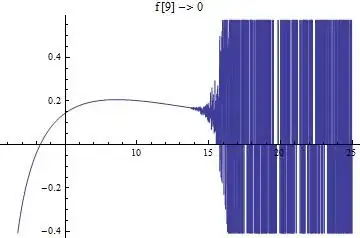
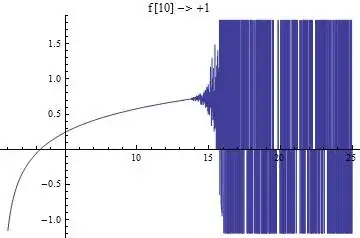
This way I came up with the sequence
f = {1, -1, -1, 0, -1, 1, -1, 1, 0, 1}
After n = 10 the accuracy decreases drastically, and I stopped.
Then I looked up the OEIS database, and I found several entries. The most interesting is A210826.
Here we find the comment:
Conjecture: this is a multiplicative sequence with Dirichlet g.f. zeta(3s)/zeta(s)
And - believe it or not, dear Geoffrey - your own MATHEMATICA entry as of TODAY:
Mod[Table[DivisorSigma[0, n], {n, 1, 100}], 3, -1]
(* Geoffrey Critzer, Mar 19 2015 *)
Very nice, but I would greatly appreciate to see your proof.
EDIT #1
The procedure does not give reasonable results for Zeta[4s]/Zeta[s]. I don't know if this is a question of accuracy already for n=4 or if Zeta[4s]/Zeta[s] can be written in the form of t[s] at all.
EDIT #2
24.03.15
Solution by direct computation, i.e. comparing "Dirichlet"-powers n^-x of the two expressions Zeta[k*x] and Zeta[x] * Sum[f[n]/n^x,{n,1,oo}]
fqZeta[k_, nn_] := Module[{z, d, x, g, eqs, sol, t},
  z[x_, p_] := Sum[1/n^x, {n, 1, p}];
  d[x_, p_] := Sum[f[n]/n^x, {n, 1, p}];
  g[k] = (z[k x, nn] - z[x, nn]*d[x, nn] // Expand) /.
    a_^( c_ b_) -> Simplify[(a^b)]^c;
  eqs[k] =
   Table[0 == (1/m^-x Plus @@ Cases[g[k], _. m^-x]) // Simplify, {m, 2, nn}];
  sol[k] = Solve[Join[{f[1] == 1}, eqs[k]]][[1]];
  t[k] = Table[f[n], {n, 1, nn}] /. sol[k]]
Example
fqZeta[4, 25]

(*
Out[385]= {1, -1, -1, 0, -1, 1, -1, 0, 0, 1, -1, 0, -1, 1, 1, 1, -1, \
0, -1, 0, 1, 1, -1, 0, 0}
*)
No specific problems for large k found.
Here's k = 9:
dt89 = Timing[fqZeta[9, 400] - fqZeta[8, 400]];

dt89[[1]]

(*
Out[370]= 73.663
*)
Fairly quick and
Select[dt89[[2]], # != 0 &]

(*
Out[371]= {-1}
*)
different from k = 8 at
Position[dt89[[2]], -1]

(*
{{256}}
*)
EDIT #3: Explicit formula
28.03.15
The formula
We give an explicit formula for the Dirichlet coefficient $\text{a(k,n)}$ of $\text{$\zeta $(k x)/$\zeta $(x)}$ for integer $k>0$.
The defining identity for $a(n)$ is
$$\text{$\zeta $(k x)/$\zeta $(x) = Sum$\_\{$n$>$=1$\}$ a(k,n)/r${}^{\wedge}$x}$$
and we have
$$\text{a(k,n) = Sum$\_\{$d${}^{\wedge}$k$|$n$\}$ $\mu $(n/d${}^{\wedge}$k)}$$
where $\text{$\mu $(n)}$ is the Moebius function.
Proof
To prove the formula we need two ingredients
1) the Dirichlet series of 1/$\zeta $(x). Which is
$$\text{1/$\zeta $(x) = Sum$\_\{$n$>$=1$\}$ $\mu $(n)/n${}^{\wedge}$x}$$
2) the Dirichlet series of a product of two Dirichlet series
$$\text{(Sum$\_\{$n$>$=1$\}$ u(n)/n${}^{\wedge}$x)*(Sum$\_\{$m$>$=1$\}$ v(m)/m${}^{\wedge}$x) = Sum$\_\{$r$>$=1$\}$ w(r)/r${}^{\wedge}$x}$$
where $\text{w(r) = Sum$\_\{$d$|$r$\}$ u(d) v(r/d)}$
Both relations are standard number theory knowledge, and I'll leave it to the reader as a nice exercise to derive them by himself.
Mathematica
In Mathematica we can write the Dirichlet coefficient as
a[k_, n_] :=
 Plus @@ (MoebiusMu[n/#^k] & /@ Select[(Divisors[n])^(1/k), IntegerQ[#] &])
Examples
Table[a[1, n], {n, 1, 10}]

(*
Out[390]= {1, 0, 0, 0, 0, 0, 0, 0, 0, 0}
*)

Table[a[2, n], {n, 1, 10}]

(*
Out[391]= {1, -1, -1, 1, -1, 1, -1, -1, 1, 1}
*)
Note that $\text{a(2,n)}$ is the Liouville function $\text{$\lambda $(n)}$.
Table[Print[{k,
    Table[ToString[a[k, n]] /. {"0" -> " 0", "1" -> " 1"}, {n, 1,
      32}]}], {k, 2, 6}];

{2,{ 1,-1,-1, 1,-1, 1,-1,-1, 1, 1,-1,-1,-1, 1, 1, 1,-1,-1,-1,-1, 1, 1,-1, 1, 1, 1,-1,-1,-1,-1,-1,-1}}

{3,{ 1,-1,-1, 0,-1, 1,-1, 1, 0, 1,-1, 0,-1, 1, 1,-1,-1, 0,-1, 0, 1, 1,-1,-1, 0, 1, 1, 0,-1,-1,-1, 0}}

{4,{ 1,-1,-1, 0,-1, 1,-1, 0, 0, 1,-1, 0,-1, 1, 1, 1,-1, 0,-1, 0, 1, 1,-1, 0, 0, 1, 0, 0,-1,-1,-1,-1}}

{5,{ 1,-1,-1, 0,-1, 1,-1, 0, 0, 1,-1, 0,-1, 1, 1, 0,-1, 0,-1, 0, 1, 1,-1, 0, 0, 1, 0, 0,-1,-1,-1, 1}}

{6,{ 1,-1,-1, 0,-1, 1,-1, 0, 0, 1,-1, 0,-1, 1, 1, 0,-1, 0,-1, 0, 1, 1,-1, 0, 0, 1, 0, 0,-1,-1,-1, 0}}
Remarks
1) For small k the series are in OEIS (https://oeis.org/)
k = 2
A008836
Liouville's function $\text{$\lambda $(n)} = (-1){}^{\wedge}$k, where k is number of primes dividing n (counted with multiplicity), N. J. A. Sloane
k = 3
A210826
G.f.: $\text{Sum$\_\{$n$>$=1$\}$ a(n)*x${}^{\wedge}$n/(1 - x${}^{\wedge}$n) = Sum$\_\{$n$>$=1$\}$ x${}^{\wedge}$(n${}^{\wedge}$3)}$, Paul D. Hanna, Mar 27 2012
k = 4
A219009
Coefficients of the Dirichlet series for zeta(4s)/zeta(s), Benoit Cloitre, Nov 09 2012
k = 5
A253206
Coefficients of the Dirichlet series for zeta(5x)/zeta(x), here the Mathematica formula for a[k,n] is given, Wolfgang Hintze, Mar 25 2015
2) Miscellaneous
a) Prove that $\text{a(k,n) $\in $ $\{$-1,0,1$\}$}$


