The Problem
I believe this is a bug in TableForm. We can see by looking at the Box form of the output that the option ColumnAlignments of the outermost GridBox does not behave as it should.
tab = {{1, {1, 1, 1}}, {2, {2, 2, 2}}, {3, {3, 3, 3}}, {4, {4, 4, 4}}};

getOption = Options[First@ToBoxes@#, ColumnAlignments] &;

tForm =
 TableForm[tab,
   TableHeadings -> {None, {"Title 1", "Title 2"}},
   TableAlignments -> #] &;

Table[
  {ali, getOption @ tForm @ ali},
  {ali, {Left, Center, Right, Top, Bottom}}
] // TableForm

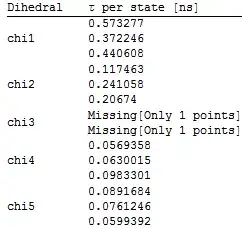
As you can see this option tracks TableAlignments for every value except Left.
A solution
Since this answer is not complete without a work-around:
fix =
  DisplayForm @ Replace[
    ToBoxes @ #,
    (ca : ColumnAlignments -> _) :> (ca -> Left),
    {2}
  ] &;

fix @ tableImage
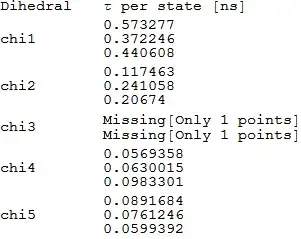
A fix to load at startup
Here are two options for a fix suitable for inclusion in your init.m file.
Method #1
This is just packaging the simple fix above. It could be problematic because it forces evaluation of TableForm into boxes, when TableForm normally acts as a wrapper. For this reason method #2 should be used if possible.
Unprotect[TableForm];

x : TableForm[__, TableAlignments -> Left | {Left, _}, ___] :=
  Replace[
    MakeBoxes @ x,
    (ca : ColumnAlignments -> _) :> (ca -> Left),
    {2}
  ] // DisplayForm

Protect[TableForm];
Method #2
This is considerably more verbose, but it works at the correct level (MakeBoxes).
However, it may be a bit fragile: when a TableForm expression is first displayed (or explicitly sent to MakeBoxes) certain additional definitions are loaded internally. I use such an explicit call, add my definition, and then modify the order of the FormatValues of TableForm. Should there be some other internal initialization that resets the FormatValues or changes their order this fix will be lost. It is important that this code not be evaluated twice in one session or the FormatValues will be out of order and the fix will fail.
Unprotect[TableForm]

TableForm[{}] // ToBoxes; (* pre-load TableForm's FormatValues; do not remove! *)

MakeBoxes[x : TableForm[__, opts : OptionsPattern[]], _] /; ! TrueQ[tfAlignLeftFix] :=
  Block[{tfAlignLeftFix = True},
    Replace[MakeBoxes@x, (ca : ColumnAlignments -> _) :> (ca -> Left), {2}]
  ] /; MatchQ[OptionValue[TableForm, {opts}, TableAlignments], Left | {Left, _}]

FormatValues@TableForm = RotateRight@FormatValues@TableForm;

Protect[TableForm]
This method also adds robust detection of the alignment option, e.g. including those set with Options[TableForm] = . . . and of the form TableForm[_, {options}].




TableFormwithTableAlignments->Leftit converts the expression to boxes and replaces theColumnAlignmets, then it converts this back to DisplayForm. What is the purpose ofx:and/;?xis probably the whole matched expression and the conditional assignment is there to prevent recursion? – Ajasja Jul 04 '12 at 09:15$that I have reported on Meta.) – Mr.Wizard Jul 04 '12 at 09:16TableForms? – Ajasja Jul 04 '12 at 09:25xis the original function call toTableFormunchanged and it is given toToBoxeswithin the fix, without theBlockthis would again match the pattern given and start an infinite recursion. There are other ways around this problem but this one is nice and clean. I learned it here. – Mr.Wizard Jul 04 '12 at 09:30Unevaluated@xworks also. Further, I believe we can simple useMakeBoxesas this already holds its arguments. I shall update my answer accordingly. – Mr.Wizard Aug 24 '12 at 08:25