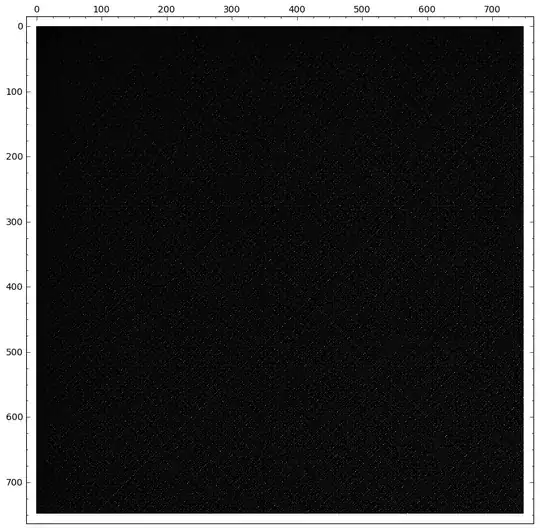
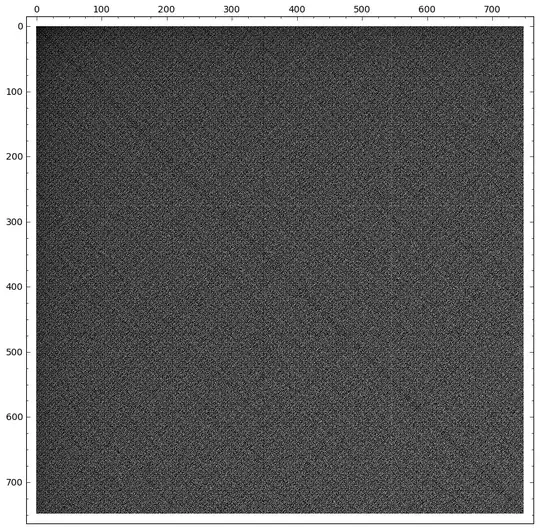
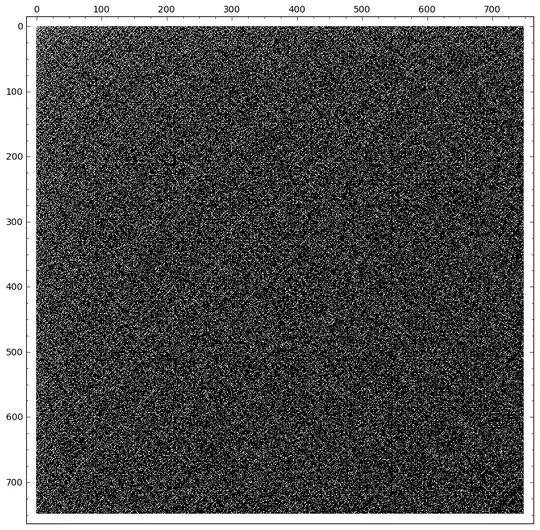
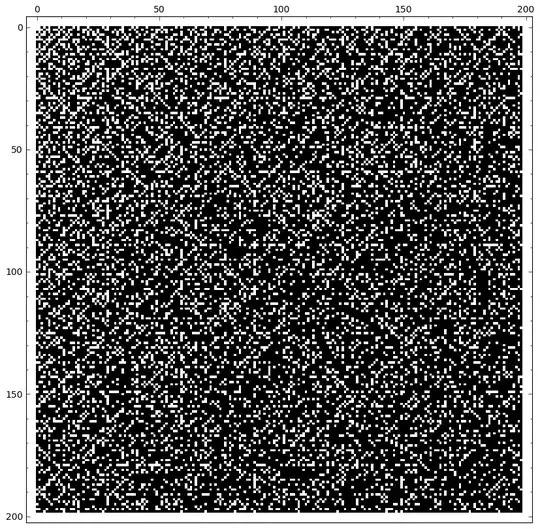
This is a series of questions inspired by the MathOverflow question Find the least prime so that p-1 has two factors greater than $m$ and $n$ posted by Aaron Sterling.
I suggested plotting primes by marking the status of the number $(nm+1)$ at coordinate $(n,m)$. Using commutativity, I have combined two ASCII art plots for $1 \leq n,m \leq 50$ in a figure-ground contrast. (Perhaps Joseph O'Rourke will be inspired to provide some similar but nicer looking plots for other ranges of $n$ and $m$.) In the plots below, + indicates $nm+1$ is prime, and other characters (after a shift in one coordinate) indicates whether $nm + 1$ has a factor of two, three or five.
+  .o.Oo .oO o .O. o Oo. oO.o. O .o.Oo .oO o .O. o Oo
++  O o  O  o Oo  oO o  O  o Oo  oO o  O  o Oo  oO o
 +   O . .O. . O . .O. . O . .O. . O . .O. . O . .O.
+ ++   oO o  O  o Oo  oO o  O  o Oo  oO o  O  o Oo  o
 +     . o .o. o .o. o .o. o .o. o .o. o .o. o .o. o
+++ ++     O    O    O    O    O    O    O    O    O
   + +   Oo. oO.o. O .o.Oo .oO o .O. o Oo. oO.o. O .o
 +  +     O o  O  o Oo  oO o  O  o Oo  oO o  O  o Oo
 + +   +   . O . .O. . O . .O. . O . .O. . O . .O. .
+ ++ ++  +   o  o  o  o  o  o  o  o  o  o  o  o  o  o
 +   + +     . oO.o. O .o.Oo .oO o .O. o Oo. oO.o. O
+ + ++ ++     O    O    O    O    O    O    O    O
   + +   + +   Oo. oO.o. O .o.Oo .oO o .O. o Oo. oO.o
 ++ +  ++    +    O  o Oo  oO o  O  o Oo  oO o  O  o
 + +     + + +   . . . . . . . . . . . . . . . . . .
+    ++    +  ++   o Oo  oO o  O  o Oo  oO o  O  o Oo
     + +     +     O o .O. o Oo. oO.o. O .o.Oo .oO o
++ + ++ +++   + +   O    O    O    O    O    O    O
         + +         .oO o .O. o Oo. oO.o. O .o.Oo .o
 ++ +   +  + +     +    o  o  o  o  o  o  o  o  o  o
 +   +   +     + + +   . .O. . O . .O. . O . .O. . O
+ ++    +     ++ ++ +   Oo  oO o  O  o Oo  oO o  O  o
 +   +     +       +     O o .O. o Oo. oO.o. O .o.Oo
  ++   + +  ++  +++    +    O    O    O    O    O
   + +   +     +       +   .o. o .o. o .o. o .o. o .o
 ++ ++     +    +  ++ +  +    oO o  O  o Oo  oO o  O
   + +   +   + + + +         O . .O. . O . .O. . O .
+  +  +  + +  ++     + ++ +   Oo  oO o  O  o Oo  oO o
 +     +   +     +             . O .o.Oo .oO o .O. o
++  +++++ +  +   ++++++ + +
         + +         +           .o.Oo .oO o .O. o Oo
  +  + +  +  +   + ++  +    +     O o  O  o Oo  oO o
 +   +   + + +     + +   +   +     O . .O. . O . .O.
  ++  + +  ++    ++       ++ +  +    oO o  O  o Oo  o
 +   + +   + +   + +     +   +       . o .o. o .o. o
+++ +     ++  +++   + +  + +  ++   +     O    O    O
   + +         +                 +     Oo. oO.o. O .o
    ++    ++  + +  +        +  +        O o  O  o Oo
 + +   +     +       + +   + + + +   +   . O . .O. .
+    ++  +  + ++  +  +       +  ++  +  +   o  o  o  o
 +               + +         +       +     . oO.o. O
+ + +  ++++ + ++ +  + ++++    +  ++  +  +   O    O
   +     +           + +     +     +   +     Oo. oO.o
 +     ++    ++    +  +     ++ ++               O  o
   + +     + +   +   +   +       + +   +       . . .
+ +  +   +  + +  +  ++  +  + ++    +     ++      o Oo
     +       +     +   + +         + +     +     O o
 + ++ + +  + + +    +  ++++   +     + +  + ++     O
   +     +       +         + +   +                 .o
 ++ +  +   + ++     + ++ +  +  +   + ++     + +
Based on this plot, I suspect my conjecture about the prime "nearest" to and greater than $n*m$ being at most $4nm$ not only holds (as a sort of 2-dimensional Bertrand's conjecture), but that this prime differs in taxicab distance by $O(\log(nm)^2)$. In other words, there is an absolute constant $C$ such that there is a prime $p$ with $p-1 = n'm'$, and with $n \leq n' \leq n + C\log(nm)^2$ and also $m \leq m' \leq m + C\log(nm)^2$. I am interested in information supporting or refuting my suspicion (and I suspect Aaron Sterling shares this interest), but that is incidental to what follows.
The primary question is a reference request: has anyone seen a plot like this before in the literature? I know of Ulam Spirals ( http://en.wikipedia.org/wiki/Ulam_spiral ) and it seems that artefacts in the plot might be related to a conjecture of Hardy and Littlewood regarding primes of the form $ax^2 +bx +c$. What I find striking are the diagonals that occur in the plot, especially those starting at $(a,a)$ and continuing in the direction $(2,-1)$. In particular, the sequence 101,109,113,113,109,101,89,73,53,29 appears as such a diagonal. Is it possible that primes of the form $a^2 + 1$ lead to prime rich polynomials of the form $(a+2t)(a-t)+1$? The secondary question series is: what is known about prime rich quadratic polynomials, and does such knowledge follow naturally from studying plots like those above?
Gerhard "Ask Me About System Design" Paseman, 2011.10.11


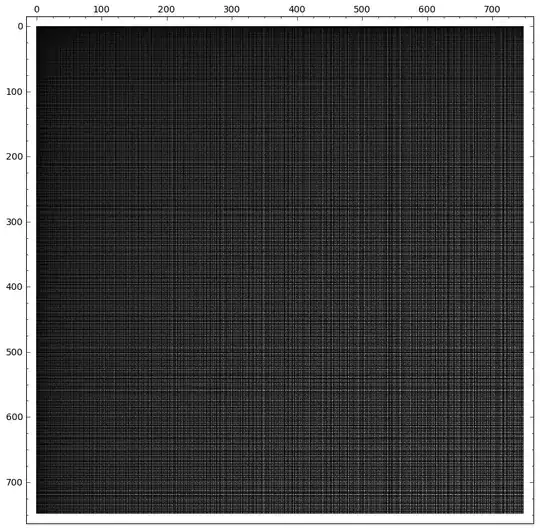 number of divisors of $xy+1$