From a (very long, but definitely worth to read) article on SSDs:
When you delete a file in your OS, there is no reaction from either a hard drive or SSD. It isn’t until you overwrite the sector (on a hard drive) or page (on a SSD) that you actually lose the data. File recovery programs use this property to their advantage and that’s how they help you recover deleted files.
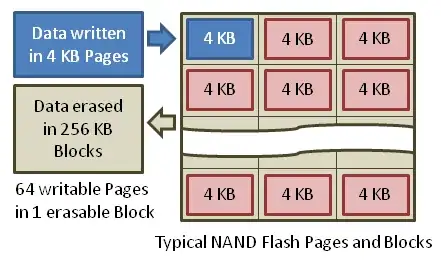
The key distinction between HDDs and SSDs however is what happens when you overwrite a file. While a HDD can simply write the new data to the same sector, a SSD will allocate a new (or previously used) page for the overwritten data. The page that contains the now invalid data will simply be marked as invalid and at some point it’ll get erased.
So, what would be the best way to securely erase files stored on a SSD? Overwriting with random data as we are used to from hard disks (e.g. using the "shred" utility) won't work unless you overwrite the WHOLE drive...




secure_erasecommand is part of the ATA standard. It may not be present on some cheaper drives, but if it is there it should work properly. The reason it works better than other options is that it restores the drive to its original factory configuration. Even on HDDs it is faster and more effective than tools like DBAN. – Paul Dec 25 '14 at 13:11autonuke, then perform asecure_erase. The second step would potentially erase portions that an OS cannot reach. Maybe there is a better way. – Paul Dec 25 '14 at 17:21