\documentclass{article}
\usepackage{fontspec}
\setmainfont{Noto Serif}
\usepackage{multicol}
\newcommand\BFmapsto[2]{%
\noindent #1 $\mapsto$ {#2}\par
}
\ExplSyntaxOn
    \cs_generate_variant:Nn
        \seq_gset_split:Nnn
        { cno }

\cs_generate_variant:Nn
        \tl_count_tokens:n
        { V }


\cs_generate_variant:Nn
        \tl_greplace_all:Nnn
        { Nxx }


\int_new:N
        \l_fc_rweqz_int
\int_new:N
        \l_fc_rweqy_int


%------------------
    \cs_set:Npn \fc_funcshowmap:n #1 {
    % 1=translit pair from;to
            \seq_set_split:Nnn
                    \l_fc_rweqz_seq
                    { ; }
                    { #1 }
            \tl_set:Nx
                    \l_fc_rweqz_tl %from
                    {
                        \seq_item:Nn
                                \l_fc_rweqz_seq
                                {1}
                    }
            \tl_set:Nx
                    \l_fc_rweqy_tl %to
                    {
                        \seq_item:Nn
                                \l_fc_rweqz_seq
                                {2}
                    }

                    \BFmapsto {\l_fc_rweqz_tl} {\l_fc_rweqy_tl}
}
%------------------
    \cs_set:Npn \fc_functranslit:n #1 {
    % 1=translit pair from;to
            \seq_set_split:Nnn
                    \l_fc_rweqz_seq
                    { ; }
                    { #1 }
%           \seq_show:c
%                   { l_fc_rweqz_seq }
            \tl_set:Nx
                    \l_fc_rweqz_tl %from
                    {
                        \seq_item:Nn
                                \l_fc_rweqz_seq
                                {1}
                    }
%           \tl_show:N
%                   \l_fc_rweqz_tl %from
            \tl_set:Nx
                    \l_fc_rweqy_tl %to
                    {
                        \seq_item:Nn
                                \l_fc_rweqz_seq
                                {2}
                    }

            \tl_greplace_all:Nxx
                \g_myBFts_tl
                { \l_fc_rweqz_tl }
                { \l_fc_rweqy_tl }
%           \tl_show:N
%               \g_myBFts_tl
}
%------------------
    \cs_set:Npn \ic_funcsortseq:cn #1#2 { % 1=seq, 2=order (<:descending, >:ascending)
    \seq_sort:cn  { #1 } %\l_fc_rweq_seq
        {
            \seq_clear:N
                    \l_fc_rweqz_seq
            \seq_clear:N
                    \l_fc_rweqy_seq
            \seq_set_split:Nnn
                    \l_fc_rweqz_seq
                    { ; }
                    { ##1 }
            \seq_set_split:Nnn
                    \l_fc_rweqy_seq
                    { ; }
                    { ##2 }
            \tl_set:Nx
                    \l_fc_rweqz_tl
                    {
                        \seq_item:Nn
                                \l_fc_rweqz_seq
                                {1}
                    }
            \tl_set:Nx
                    \l_fc_rweqy_tl
                    {
                        \seq_item:Nn
                                \l_fc_rweqy_seq
                                {1}
                    }
        \int_set:Nn
                \l_fc_rweqz_int
                {
                    \tl_count_tokens:V
                            \l_fc_rweqz_tl
                }
        \int_set:Nn
                \l_fc_rweqy_int
                {
                    \tl_count_tokens:V
                    \l_fc_rweqy_tl
                }
        \int_compare:nNnTF
                { \l_fc_rweqz_int } { #2 } { \l_fc_rweqy_int }
                { \sort_return_swapped: }
                { \sort_return_same: }
    }

}
%------------------
    \cs_set:Npn \doBFshowmap:n #1 {
            \exp_args:Nx
            \seq_map_function:cN
                    { g_fc_rwe \g_fc_namespace_tl #1 _seq }
                    \fc_funcshowmap:n
}


%------------------
    \cs_set:Npn \doBFtransts:n #1 {
%           \seq_show:c
%                   { g_fc_rwe \g_fc_namespace_tl #1 _seq }
            \exp_args:Nx
            \seq_map_function:cN
                    { g_fc_rwe \g_fc_namespace_tl #1 _seq }
                    \fc_functranslit:n
}


%--------------------
\NewDocumentCommand { \mfsloadaseq } { o m +m } {
% 1=namespace
% 2=seq name
% 3=data
            \IfNoValueTF { #1 }
                    { \tl_clear:N \g_fc_namespace_tl }
                    { \tl_gset:Nn \g_fc_namespace_tl { #1 } }


\cs_if_free:cT
        { g_fc_rwe \g_fc_namespace_tl #2 _seq }
        { \seq_new:c
                { g_fc_rwe \g_fc_namespace_tl #2 _seq }
            }
\seq_gclear:c
        { g_fc_rwe \g_fc_namespace_tl #2 _seq }
\seq_gset_split:cno
        { g_fc_rwe \g_fc_namespace_tl #2 _seq }
        { , }
        { #3 }

}
%--------------------
\NewDocumentCommand { \mfssortaseq } { o m m } {
%1=namespace
%2=seqname,
%3=><, asc/desc
            \IfNoValueTF { #1 }
                    { \tl_clear:N \g_fc_namespace_tl }
                    { \tl_gset:Nn \g_fc_namespace_tl { #1 } }


\ic_funcsortseq:cn { g_fc_rwe \g_fc_namespace_tl #2 _seq } { #3 }
}
\NewDocumentCommand { \blackfoot } { m } {%
\BFtrans {#1}
}
\NewDocumentCommand { \BFtrans } { O{ts} m } {%
\cs:w BFtrans#1 \cs_end: {#2}
}
\tl_new:N \l_myBFts_tl
\NewDocumentCommand { \BFts } { m } { \BFtransts {#1} }
\NewDocumentCommand { \BFtransts } { m } {%
\tl_gset:Nn \g_myBFts_tl { #1 }
\doBFtransts:n {BF}
\tl_use:N \g_myBFts_tl
}
\NewDocumentCommand { \BFmap } { } {%
%\tl_gset:Nn \g_myBFts_tl { #1 }
\doBFshowmap:n {BF}
%\tl_use:N \g_myBFts_tl
}
\ExplSyntaxOff
%%%%%%
\mfsloadaseq{BF}{
a';á
,e';é
,i';í
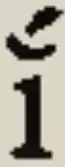
,ib';ĭ́
,o';ó
,a;á
,e;é
,i;í
,i;ĭ́
,o;ó
,-;́
,--;̆́
}
\mfssortaseq{BF}{<}
\begin{document}
\blackfoot{ni'so}
\blackfoot{a' e' i' ib' o'} :: \blackfoot{a* e* i* i** o} :: \blackfoot{A- E-* I-* I--* O-* A-*a}
\noindent Transliteration Schemes
\begin{multicols}{4}
\BFmap
\end{multicols}
\bigskip
\begin{tabular}{cl}
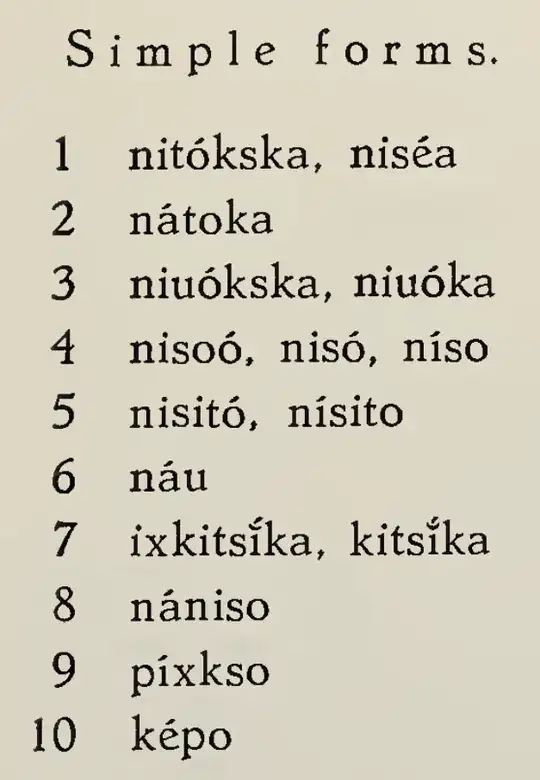
1 & \blackfoot{nito'kska, nise'a}\
2 & \blackfoot{na'toka} \
3 & \blackfoot{niuo'kska, niuo'ka} \
4 & \blackfoot{nisoo', niso', ni'so} \
5 & \blackfoot{nisito', ni'sito} \
6 & \blackfoot{na'u} \
7 & \blackfoot{ixkitsib'ka, kitsib'ka} \
8 & \blackfoot{na'niso} \
9 & \blackfoot{pi'xkso} \
10 & \blackfoot{ke'po} \
100 & \blackfoot{kiipi'ppo} \
\end{tabular}
\end{document}