Here's a fairly general macro:
\documentclass{article}
\usepackage{xparse}

\ExplSyntaxOn
\NewDocumentCommand{\countsubstringtestTF}{mmmmm}
 {% #1 = substring to test for, #2 = string, #3 = test, #4 = true text, #5 = false text
  \seq_set_split:Nnn \l__salys_substring_seq { #1 } { #2 }
  \cs_set:Nn \__salys_substring_test:n
   {
    \int_compare:nTF { #3 } { #4 } { #5 }
   }
  \__salys_substring_test:n { \seq_count:N \l__salys_substring_seq - 1 }
 }
\seq_new:N \l__salys_substring_seq
\ExplSyntaxOff

\begin{document}

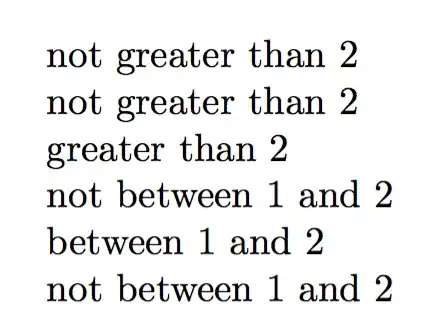
\countsubstringtestTF{~}{This is a test}{#1>2}{greater than 2}{not greater than 2}

\countsubstringtestTF{~}{This~is a~test}{#1>2}{greater than 2}{not greater than 2}

\countsubstringtestTF{~}{This~is~a~test}{#1>2}{greater than 2}{not greater than 2}

\countsubstringtestTF{~}{This is a test}{1 <= #1 <= 2}{between 1 and 2}{not between 1 and 2}

\countsubstringtestTF{~}{This~is a~test}{1 <= #1 <= 2}{between 1 and 2}{not between 1 and 2}

\countsubstringtestTF{~}{This~is~a~test}{1 <= #1 <= 2}{between 1 and 2}{not between 1 and 2}

\end{document}
The number of matches is denoted, in the third argument, by #1; you can do several sorts of comparisons, like the ones shown here.
If you want to allow the second argument to be a control sequence, you can define a variant.
\documentclass{article}
\usepackage{xparse}

\ExplSyntaxOn
\NewDocumentCommand{\countsubstringtestTF}{smmmmm}
 {
  \IfBooleanTF { #1 }
   {
    \salys_countsubstringtest:nVnTF #2 { #3 } { #4 } { #5 } { #6 }
   }
   {
    \salys_countsubstringtest:nnnTF { #2 } { #3 } { #4 } { #5 } { #6 }
   }
 }
\cs_new_protected:Nn \salys_countsubstringtest:nnnTF
 {% #1 = substring to test for, #2 = string, #3 = test, #4 = true text, #5 = false text
  \seq_set_split:Nnn \l__salys_substring_seq { #1 } { #2 }
  \cs_set:Nn \__salys_substring_test:n
   {
    \int_compare:nTF { #3 } { #4 } { #5 }
   }
  \__salys_substring_test:n { \seq_count:N \l__salys_substring_seq - 1 }
 }
\seq_new:N \l__salys_substring_seq
\cs_generate_variant:Nn \salys_countsubstringtest:nnnTF { nV }
\ExplSyntaxOff

\newcommand{\mystringA}{This~is a~test}
\newcommand{\mystringB}{This~is~a~test}

\begin{document}

\countsubstringtestTF{~}{This is a test}{#1>2}{greater than 2}{not greater than 2}

\countsubstringtestTF*{~}{\mystringA}{#1>2}{greater than 2}{not greater than 2}

\countsubstringtestTF*{~}{\mystringB}{#1>2}{greater than 2}{not greater than 2}

\countsubstringtestTF{~}{This is a test}{1 <= #1 <= 2}{between 1 and 2}{not between 1 and 2}

\countsubstringtestTF{~}{This~is a~test}{1 <= #1 <= 2}{between 1 and 2}{not between 1 and 2}

\countsubstringtestTF{~}{This~is~a~test}{1 <= #1 <= 2}{between 1 and 2}{not between 1 and 2}

\end{document}


