The question is an XY question and also a subset of the more general question of how attaching arbitrary metatext to text can be done.
For example, in the first instance, using white-text, with zero-width boxes taking care of the extra spacing.

Obviously, a non-white page colour (\pagecolor{black}, for example), makes white text visible.
Plus, copy-pasting reveals "gibberish":
TheCcoaptCysroaiptgCyhortonipgC2tyh0ohrt2pei2g2Cy.mh0roti2Aapg22thyl.l.
MWE
\documentclass{article}
\usepackage{xcolor}
\newcommand\cmetatext{Copyright 2022. All Rights Reserved. }
\ExplSyntaxOn
\NewDocumentCommand { \cmeta } { s } {
    \tl_set:Nx \l_tmpb_tl { \cmetatext }
    \hbox_set:Nn \l_tmpb_box { \l_tmpb_tl }
        \IfBooleanF { #1 }
    {
    \box_set_wd:Nn
            \l_tmpb_box
            { 0pt }
  }
        \group_begin:
        \IfBooleanTF { #1 }
        {
                \color{blue}
        }
        {
                \color{white}
        }
            \box_use:N  \l_tmpb_box
    \group_end:

}
\NewDocumentEnvironment { cmetaenv } { s +b } {
    \tl_set:Nx \l_tmpa_tl { #2 }
    \IfBooleanTF { #1 }
    {
    \regex_replace_all:nnN
            { (\S+) }
            { \0 \c{cmeta}* }
            \l_tmpa_tl
    }
    {
    \regex_replace_all:nnN
            { (\S+) }
            { \0 \c{cmeta} }
            \l_tmpa_tl
    }
        \tl_use:N \l_tmpa_tl


}{}
\ExplSyntaxOff
\newcommand\test{The cat sat on the mat. }
\begin{document}
zero-width box, white text:
\begin{cmetaenv}
\test
\test
\test
\end{cmetaenv}
\test\cmeta\ xxx
\bigskip
natural-width box, blue text:
\begin{cmetaenv}*
\test
\test
\test
\end{cmetaenv}
\test\cmeta*\ xxx
\end{document}
However, leaving out zero-width boxes and white text, and instead scaling the metatext font to Infodot sizes results in:

Zooming in:
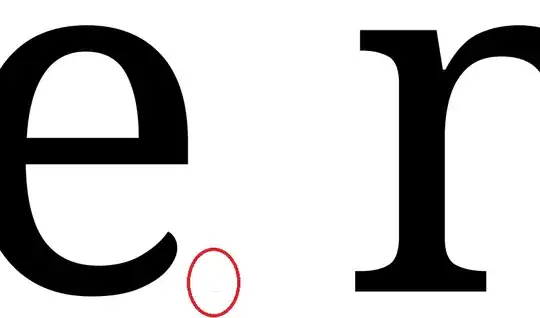
Zooming in some more:

and the result of copy-pasting is the much more legible:
TheCopyright 2022. All Rights Reserved. catCopyright 2022. All Rights Reserved. satCopyright 2022. All Rights Reserved. onCopyright 2022. All Rights Reserved. theCopyright 2022. All Rights Reserved. mat.Copyright 2022. All Rights Reserved. The
MWE
\documentclass{article}
\usepackage{xcolor}
\usepackage{fontspec}
\setmainfont{NotoSerif}
\newfontface\infofont[Scale=0.001]{NotoSerif}
\newcommand\cmetatext{{\infofont Copyright 2022. All Rights Reserved. }}
\ExplSyntaxOn
\NewDocumentCommand { \cmeta } { s } {
    \tl_set:Nx \l_tmpb_tl { \cmetatext }
    \hbox_set:Nn \l_tmpb_box { \l_tmpb_tl }
    \group_begin:
    \IfBooleanTF { #1 }
    {
            \color{blue}
    }
    {
            \color{white}
    }

            \box_use:N  \l_tmpb_box
    \group_end:

}
\NewDocumentEnvironment { cmetaenv } { s +b } {
    \tl_set:Nx \l_tmpa_tl { #2 }
    \IfBooleanTF { #1 }
    {
    \regex_replace_all:nnN
            { (\S+) }
            { \0 \c{cmeta}* }
            \l_tmpa_tl
    }
    {
    \regex_replace_all:nnN
            { (\S+) }
            { \0 \c{cmeta} }
            \l_tmpa_tl
    }
        \tl_use:N \l_tmpa_tl


}{}
\ExplSyntaxOff
\newcommand\test{The cat sat on the mat. }
\begin{document}
natural-width box, white text:
\begin{cmetaenv}
\test
\test
\test
\end{cmetaenv}
\test\cmeta\ xxx
\bigskip
natural-width box, blue text:
\begin{cmetaenv}*
\test
\test
\test
\end{cmetaenv}
\test\cmeta*\ xxx
\end{document}
Using any method to try to take attribution and ownership away from others is not recommended, and it displays lack of academic ability.
On the use-case side, metatext allows the creation of three-dimensional texts, where one document can be a whole library.


censorpackage. Also:\textcolor{white}{i} + <a white space>= 2 "spaces" for the user;\textcolor{white}{i}becomes visible whenpagecoloris not transparent or white, or if textblock is selected with the mouse. Also, everywordwill copy-paste aswordi, – Cicada Oct 23 '22 at 05:42\parand so on), so do you wanti i i i i...orior some other variation? (e.g., max of 1iper word, or multiple?) – Cicada Oct 23 '22 at 05:47howi arei youi?will give spell-check error: it won't care what colour the text is. – Cicada Oct 23 '22 at 10:57