7

A skeuomorph user interface draws upon real world objects in its visual design in order to increase familiarity and the association between the product and its real world counterpart. Apple has been pushing this approach with apps like iCal:

iCal

I'm looking to do some work in this area and I'm wondering what some good examples are of skeuomorph interfaces that you've seen. Please don't just list more Apple stuff ;) Any operating system works, including web-based UIs.

Ben Brocka
  • 40,865
  • 10
  • 112
  • 183
Rahul
  • 23,822
  • 10
  • 76
  • 168
  • 3
    Clippy. If there's one thing MS office was missing it was the talking paperclip on my desk who criticizes my work, just like real life. The stapler's also been laughing at me. – Ben Brocka Nov 02 '11 at 19:37
  • "Skeumorphs in iCal include leather appearance, stitching and remnants of torn pages." For me Wikipedia says, most visual textures in iCal are skeumorph, besides torn pages. If you take this literal, you would end saying every texture imitating wood, stone, metal, whatever is skeumorph? Most textures are about imitating material, aren't they? Wiki:"In the modern era, cheaper plastic items often attempt to mimic more expensive wooden and metal products though they are only skeuomorphic" – FrankL Nov 03 '11 at 08:09
  • @FrankL I think he's asking about interfaces that specifically imitate a physical "interface" that they replace, such as the calendar app looking like the calendar replacing, rather than just buttons and such trying to look "real." Could use some more clairity in the question though – Ben Brocka Nov 03 '11 at 12:33
  • 1
    @Ben If so, I would call this a metaphorical Interface rather than skeumorph. In my understanding, skeumorph is trying to imitate for purpose of look only, but imitating a concept is a step in the direction of transfering meaning by visual clues, where skeumorph is the way and metaphor is the goal. – FrankL Nov 03 '11 at 15:29
  • I'd say that's not quite it either, you can have a beautiful calendar app that's all digital in design that has the metaphorical function of the dead tree version, but it "feels" different when you include all the pseudo-dead tree styling. – Ben Brocka Nov 03 '11 at 16:43
  • The first time I encountered the term skeumorph, it was a reference to the shutter sound on a digital camera (on a question about the floppy disk as a save icon). Is that a skeumorph? Or a placebo? Or both? – Patrick McElhaney Nov 04 '11 at 13:24
  • The page-turn animation that you find in many ebook-type and digital newspaper applications is a very clear one. – André Nov 29 '12 at 16:06

4 Answers4

5

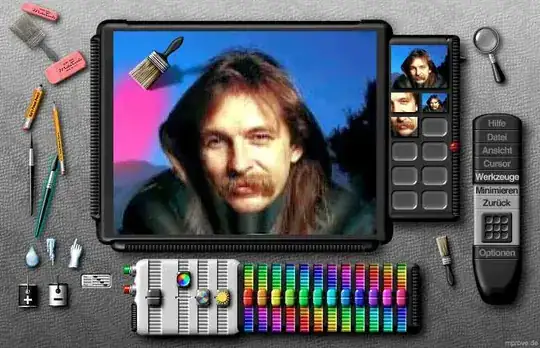
"KAI's" graphic software (KAI's Power Goo, Photo Soap ...) is an early example: https://www.mprove.de/script/99/kai/2Software.html

CodesInChaos
  • 711
  • 6
  • 9
  • 1
    This approach seemed somewhat popular in the early 90s, especially for things marketed to kids or less technical users. I was never a fan of it. – Ben Brocka Nov 02 '11 at 19:56
5

Almost all GUI design was originally based on real-world design. Buttons? That you push 'in'? Checkboxes, which you click on and a pencil magically fills in the checkmark or X? 'Radio' buttons, though no one has a string-tune radio any more?

So...could you narrow it down?

Alex Feinman
  • 6,254
  • 25
  • 45
  • You're right of course, but simultaneously there's a distinct difference between an obvious skeuomorph UI and what is now considered to be simply a GUI. So that's what I'm looking for. – Rahul Nov 03 '11 at 10:23
3

Not sure about 'famous' but some familiar ones off the top of my head:

  • Calculator app on Windows and OSX
  • 'stickies'
  • iOS's iBooks (one of the rare semi-tolerable uses of the 'page flip' interaction)
  • MS Bob (perhaps more infamous than famous)
DA01
  • 41,799
  • 5
  • 81
  • 142
2

I actually think one of the best examples of this isn't a graphical interface at all!

I'm thinking of Android Voice Actions and Apple's Siri.

They're a complete departure from traditional UIs because they both treat the device as a reactive, almost-conscious entity, rather than an inert machine. Living things are traditionally the only ones with which you interact with by voice (humans, dogs, etc)†.

† Yes, some people talk to plants.

msanford
  • 5,995
  • 2
  • 33
  • 52