পৰুৱা
Assamese
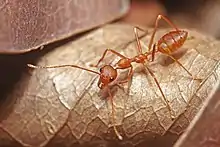
ৰঙা পৰুৱা
- roṅa porua
- a weaver ant
Alternative forms
- পুৰা (pura) — Dehan
Etymology
Inherited from Early Assamese পৰুৱা (poruwa), Sanskrit পিপীল (pipīlá). Cognate with Bengali পিঁপড়া (pĩpṛa).
Pronunciation
- IPA(key): /pɔ.ɹua/
Declension
Inflection of পৰুৱা
| Indefinite forms | Definite forms | ||||||||||||
|---|---|---|---|---|---|---|---|---|---|---|---|---|---|
| numeral | non-numeral (plural) | ||||||||||||
| singular | plural | informal | |||||||||||
| ♂ | ♀ | ♂ | ♀ | ||||||||||
| absolutive | পৰুৱা porua |
পৰুৱাটো poruatü |
পৰুৱাজনী poruazoni |
পৰুৱাকেইটা poruakeita |
পৰুৱাকেইজনী poruakeizoni |
পৰুৱাবোৰ poruabür |
পৰুৱাবিলাক poruabilak | ||||||
| ergative | পৰুৱাই poruai |
পৰুৱাটোৱে poruatüe |
পৰুৱাজনীয়ে poruazonie |
পৰুৱাকেইটাই poruakeitai |
পৰুৱাকেইজনীয়ে poruakeizonie |
পৰুৱাবোৰে poruabüre |
পৰুৱাবিলাকে poruabilake | ||||||
| accusative | পৰুৱাক poruak |
পৰুৱাটোক poruatük |
পৰুৱাজনীক poruazonik |
পৰুৱাকেইটাক poruakeizonik |
পৰুৱাকেইজনীক poruakeizonik |
পৰুৱাবোৰক poruabürok |
পৰুৱাবিলাকক poruabilakok | ||||||
| genitive | পৰুৱাৰ poruar |
পৰুৱাটোৰ poruatür |
পৰুৱাজনীৰ poruazonir |
পৰুৱাকেইটাৰ poruakeitar |
পৰুৱাকেইজনীৰ poruakeizonir |
পৰুৱাবোৰৰ poruabüror |
পৰুৱাবিলাকৰ poruabilakor | ||||||
| dative | পৰুৱালৈ porualoi |
পৰুৱাটোলৈ poruatüloi |
পৰুৱাজনীলৈ poruazoniloi |
পৰুৱাকেইটালৈ poruakeitaloi |
পৰুৱাকেইজনীলৈ poruakeizoniloi |
পৰুৱাবোৰলৈ poruabüroloi |
পৰুৱাবিলাকলৈ poruabilakoloi | ||||||
| terminative | পৰুৱালৈকে porualoike |
পৰুৱাটোলৈকে poruatüloike |
পৰুৱাজনীলৈকে poruazoniloike |
পৰুৱাকেইটালৈকে poruakeitaloi |
পৰুৱাকেইজনীলৈকে poruakeizoniloike |
পৰুৱাবোৰলৈকে poruabüroloike |
পৰুৱাবিলাকলৈকে poruabilakoloike | ||||||
| instrumental | পৰুৱাৰে poruare |
পৰুৱাটোৰে poruatüre |
পৰুৱাজনীৰে poruazonire |
পৰুৱাকেইটাৰে poruakeitare |
পৰুৱাকেইজনীৰে poruakeizonire |
পৰুৱাবোৰেৰে poruabürere |
পৰুৱাবিলাকেৰে poruabilakere | ||||||
| locative | পৰুৱাত poruat |
পৰুৱাটোত poruatüt |
পৰুৱাজনীত poruatüt |
পৰুৱাকেইটাত poruakeitat |
পৰুৱাকেইজনীত poruakeizonit |
পৰুৱাবোৰত poruabürot |
পৰুৱাবিলাকত poruabilakot | ||||||
| Classifier Note: The classifier -টো (-tü) and its plural variant -টা (-ta) can be used for both male and female. Accusative Note: -অক (-ok) is used for animate sense. No case marking is used for inanimate sense. Dative Note 1: In some dialects -অলৈ (-oloi)'s variant -অলে (-ole) is used instead. Dative Note 2: Sometimes -অক (-ok) marks this case instead of -অলৈ (-oloi). Dative Note 3: In some dialects -অত (-ot) or -অক (-ok) marks this case instead of -অলৈ (-oloi). Instrumental Note: In some dialects -এদি (-edi) marks this case instead of -এৰে (-ere). | |||||||||||||
This article is issued from Wiktionary. The text is licensed under Creative Commons - Attribution - Sharealike. Additional terms may apply for the media files.