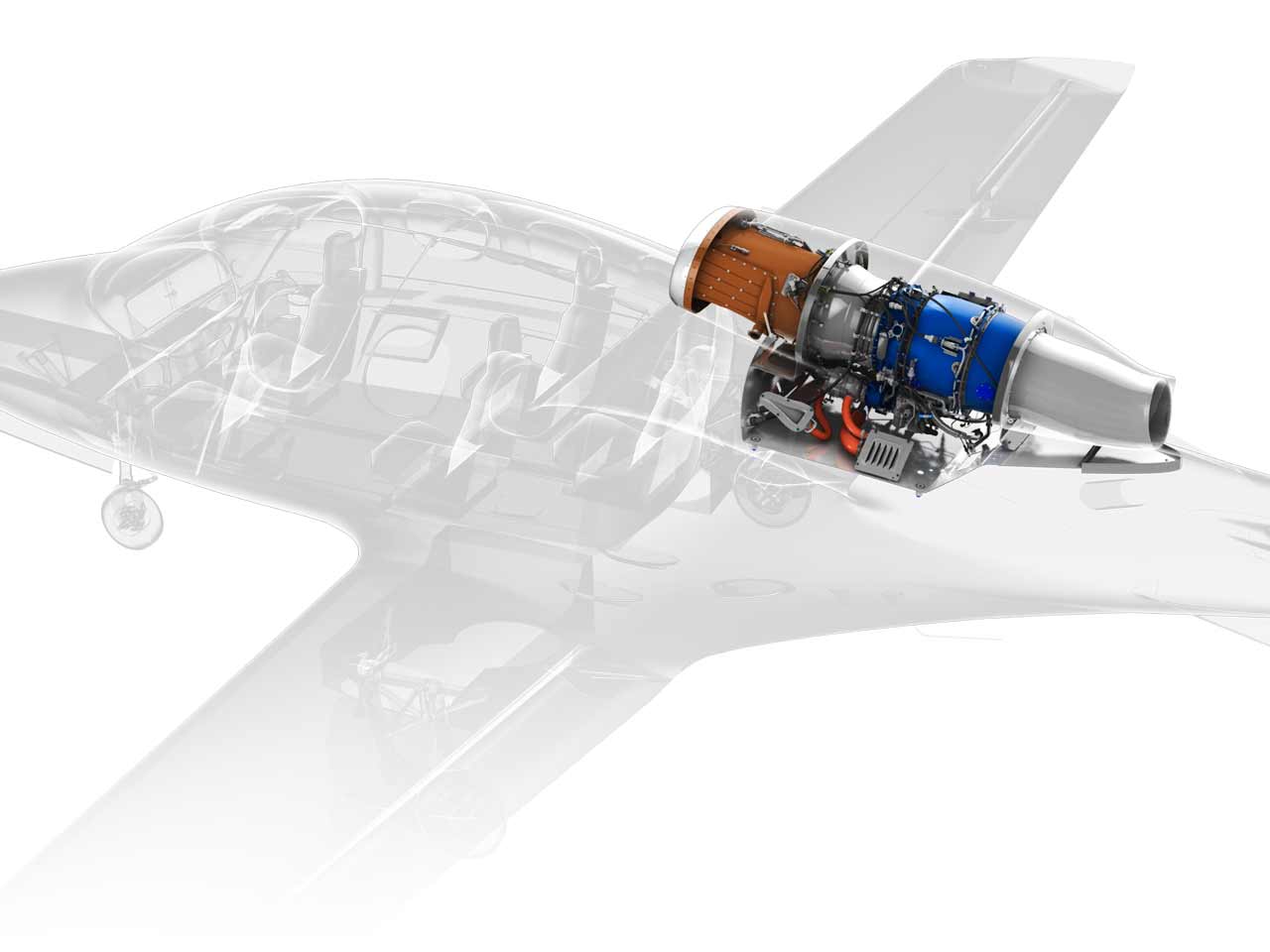
As I read it, the question is asking about the engine installation: why is it placed in the way it is?
The reason is overall simplicity. The placement of the engine avoids the need to use ducting or a pylon. If the engine was placed such that it was aligned with the longitudinal axis of the aircraf, it would either need to be installed on a pylon to lift it above the fuselage like in the case of Flaris LAR 1, or it would need to be placed inside the fuselage, necessitating ducting like in the case of Stratos 716X
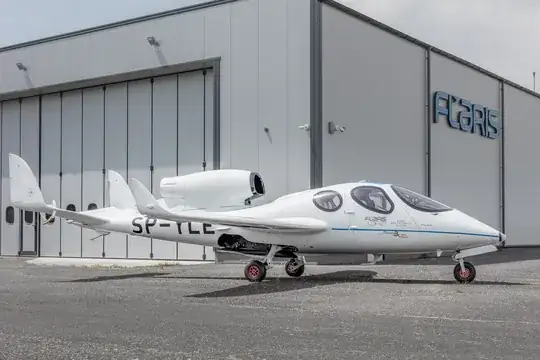 Flaris LAR1 (image from company website)
 Startos 716X (image from company website)
Installing the engine on a pylon rises the thrust vector higher, adding the pitch moment changes due to changes in thrust. Pylon also adds structural weight, as the pylon itself, but also as reinforcements necessary for the fuselage. Installing the engine inside the fuselage adds structural complexity and may complicate the design of the pressure vessel.
While the Cirrus SF50 configuration is the simpliest possible of the feasible single engine applications (installing the engine under the fuselage won't work for a number of reasons), there are two problems with it: thrust vector angle and intake flow stability at high AoA flight.
In the case of Cirrus SF50 the issue with thrust alignment has been tackled by using thrust vectoring: the exhaust is diverted more horizontal as it exits the nozzle. The airflow around the fuselage has obviously been found not to be a critical issue, but whether or not it poses limitations to the operating envelope of the aircraft is not known to me, finding this out would require some research.