This post contains several code blocks, you can copy them easily with the help of importCode.
The following is my implementation for finite Fourier transforms. Here I've also implemented finite Fourier transform, which can be viewed as the counterpart of FourierSeries:
ClearAll[finiteFourierSinTransform, finiteFourierCosTransform, finiteFourierTransform,
transformToIntegrate]
(#[(h : List | Plus | Equal)[a__], x_, n_] := Function[f, #[f, x, n]] /@ h[a];
    #[a_ b_, {x_, xmin_, xmax_}, n_] /; FreeQ[b, x] :=
     b #[a, {x, xmin, xmax}, n]) & /@ {finiteFourierSinTransform,
   finiteFourierCosTransform, finiteFourierTransform};
argumentPattern = (#[
      Derivative[i___, j_, k___][head_][var1___, x_, var2___], {x_, xmin_, xmax_}, n_] /;
      Length@{i} === Length@{var1} && j > 0) &;
With[{f = Derivative[i, j - 1, k][head]},
 Evaluate@argumentPattern@
    finiteFourierSinTransform := -((n Pi)/(xmax - xmin)) finiteFourierCosTransform[
    f[var1, x, var2], {x, xmin, xmax}, n];
Evaluate@argumentPattern@
    finiteFourierCosTransform := ((n Pi)/(xmax - xmin)) finiteFourierSinTransform[
     f[var1, x, var2], {x, xmin, xmax}, n] + (-1)^n f[var1, xmax, var2] -
   f[var1, xmin, var2];
Evaluate@argumentPattern@
    finiteFourierTransform := ((2 I n Pi)/(xmax - xmin)) finiteFourierTransform[
     f[var1, x, var2], {x, xmin, xmax},
     n] + (-1)^-n (f[var1, xmax, var2] - f[var1, xmin, var2]);
(#[f_ /; AtomQ@f || Quiet@Context@Evaluate@Head[f] === "System`", {x_, xmin_, xmax_},
      n_] :=
     With[{assump = {n ∈ Integers, xmax > xmin, #3},
       integral =
        Function[index,
         Simplify@Integrate[f #2[(index Pi (x - xmin))/(xmax - xmin)], {x, xmin, xmax}]]},
      Module[{general =
         Assuming[assump, integral@n]},
       With[{singularity =
          If[IntegerQ@n, {},
           Union@Join[If[#2 === Cos, {0}, {}],
             Piecewise[{{{}, # === n}}, #] &@(n /.
                Solve[Flatten@{assump, Denominator@Together@general == 0}, n])]]},
        Piecewise[{integral@#, n == #} & /@ singularity, general]]
       ]
      ]) & @@@ {{finiteFourierSinTransform, Sin, n > 0}, {finiteFourierCosTransform, Cos,
     n >= 0}};
finiteFourierTransform[
   f_ /; AtomQ@f || Quiet@Context@Evaluate@Head[f] === "System`", {x_, xmin_, xmax_},
   n_] :=
  With[{assump = {n ∈ Integers, xmax > xmin},
    integral = Function[index,
      Simplify@Integrate[
        f E^(-((2 I index π (x - xmin - (xmax - xmin)/2))/(xmax - xmin))), {x, xmin,
         xmax}]]},
   Module[{general =
      Assuming[assump, integral@n]},
    With[{singularity =
       If[IntegerQ@n, {},
        Piecewise[{{{}, # === n}}, #] &@(n /.
           Solve[Flatten@{assump, Denominator@Together@general == 0}, n])]},
     Piecewise[{integral@#, n == #} & /@ singularity, general]]
    ]
   ]
 ]
inverseFiniteFourierSinTransform[f_, n_, {x_, xmin_, xmax_}] :=
 2/(xmax - xmin) HoldForm@Sum[#, {n, C}] &[f Sin[(n Pi (x - xmin))/(xmax - xmin)]]
inverseFiniteFourierCosTransform[f_, n_, {x_, xmin_, xmax_}] :=
 1/(xmax - xmin) (f /. n -> 0) + 2/(xmax - xmin) HoldForm@Sum[#, {n, C}] &@
  Simplify[f Cos[(n Pi (x - xmin))/(xmax - xmin)], n > 0]
inverseFiniteFourierTransform[f_, n_, {x_, xmin_, xmax_}, Re] :=
 1/(xmax - xmin) ((f E^((2 I n π (x - xmin - (xmax - xmin)/2))/(xmax - xmin)) /.
        n -> 0) + 2 HoldForm@Sum[#, {n, 1, C}] &@
    Simplify[f E^((2 I n π (x - xmin - (xmax - xmin)/2))/(xmax - xmin)) // Re,
     n ∈ Integers])
inverseFiniteFourierTransform[f_, n_, {x_, xmin_, xmax_}] :=
 1/(xmax - xmin) (HoldForm@Sum[#, {n, -C, C}] &@
    Simplify[f E^((2 I n π (x - xmin - (xmax - xmin)/2))/(xmax - xmin)),
     n ∈ Integers])
transformToIntegrate[expr_] :=
  expr /. (HoldPattern@#[f_, {x_, xmin_, xmax_}, n_] :>
        RuleCondition@(HoldForm@Integrate[#, {[FormalX], xmin, xmax}] &)[
          f #2[(n Pi (x - xmin))/(xmax - xmin)] /.
           x -> [FormalX]] & @@@ {{finiteFourierSinTransform,
        Sin}, {finiteFourierCosTransform, Cos}}) /.
   HoldPattern@finiteFourierTransform[f_, {x_, xmin_, xmax_}, n_] :>
    RuleCondition@(HoldForm@Integrate[#, {[FormalX], xmin, xmax}] &)@
      Simplify[f E^(-((2 I n π (x - xmin - (xmax - xmin)/2))/(xmax - xmin))) /.
        x -> [FormalX], n ∈ Integers];
I'm still in v9 so choose HoldForm rather than Inactivate to hold the expression.
Example
Here I'll show the usage of these functions by solving the following initial-boundary value problem (IBVP) which, as far as I can tell, can't be handled by DSolve at the moment:
$$u_{t}=\kappa u_{xx}\,, \ \ \ \ \ 0 \leq x \leq a\,,\ \ t>0$$
$$u(0,t)=0=u(a,t)$$
$$u(x,0)=f(x)\ \ \text{for}\ 0 \leq x \leq a$$
First, interprete the equation to Mathematica code:
With[{u = u[t, x]}, eq = D[u, t] == k D[u, x, x];
 ic = {u == f[x] /. t -> 0};
 bc = u == 0 /. {{x -> 0}, {x -> a}};]
Then, use finite Fourier sine transform to eliminate the derivative with respect to $x$. I've used Format to make the output better looking:
Format@finiteFourierSinTransform[f_, __] := Subscript[\[ScriptCapitalF], s][f]
Format@finiteFourierCosTransform[f_, __] := Subscript[\[ScriptCapitalF], c][f]
finiteFourierSinTransform[{eq, ic}, {x, 0, a}, n]

The transformed system involves u[t, 0] and u[t, a]: they're the boundary condition (b.c.) at hand! So, plug them in:
% /. Rule @@@ bc

Now the equation becomes an ordinary differential equation (ODE), which can be solved with DSolve:
tset = % /. HoldPattern@finiteFourierSinTransform[f_ /; ! FreeQ[f, u], __] :> f
tsol = DSolve[tset, u[t, x], t][[1, 1, -1]]
Remark
Notice I've stripped off finiteFourierSinTransform before solving
the ODE because DSolve has difficulty in understanding expression
like finiteFourierSinTransform[u[t, x], {x, 0, a}, n]. Just remember
that u[t, x] actually denotes finiteFourierSinTransform[u[t, x], {x, 0, a}, n] in tset.
The last step is to transform back. You can use transformToIntegrate to make finiteFourierSinTransform denote as an integration:
sol = inverseFiniteFourierSinTransform[tsol, n, {x, 0, a}] // transformToIntegrate

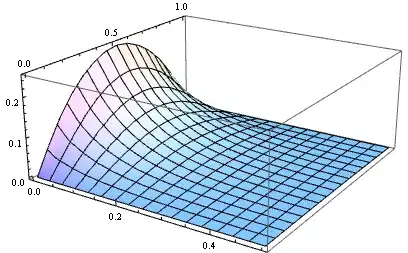
The following is the resulting graph by taking the first 5 terms of the series and choosing $f(x) = x (1 - x), a = 1, \kappa = 1$:
Plot3D[Block[{C = 5, f = (# (1 - #) &), a = 1, k = 1, HoldForm = Identity,
    Sum = Function[{expr, lst}, Total@Table[expr, lst], HoldAll] }, sol] // Evaluate, {t,
   0, 1/2}, {x, 0, 1}, PlotRange -> All]
Possible issues
These functions are built on Solve, Integrate, etc. so they inherit all their limitations.
The singularity test is simple and crude so it will probably fail in complicated cases.
The transforms are only suitable for certain types of BVP and IBVP. A typical troublesome case is the 5th exercise in Chapter 10 of Lokenath Debnath's book:
$$u_{t}=\kappa u_{xx}\,, \ \ \ \ \ 0 \leq x \leq a\,,\ \ t>0$$
$$u_{x}(0,t)=f(t)$$
$$u_{x}(a,t)+h u(a,t)=0$$
$$u(x,0)=0\ \ \text{for}\ 0 \leq x \leq a$$
For this exercise Lokenath has given the following hint:
Hint:
$$\tilde{f}_s(n)=\int_0^a f (x) \sin (\xi_{n}x) \, dx$$
$$f(x)=\mathcal{F}_s^{-1} \{\tilde{f}_s(n)\}=\frac{2}{a}\sum _{n=0}^{\infty}\frac{(h^2+\xi_n^2)\tilde{f}_s(n)\sin(x \xi_n)}{h+(h^2+\xi_n^2)}$$
where $\xi_n$ is the root of the equation $\xi \cot(a \xi)+h=0$.
$$u(x,t)=(\frac{2}{a})\sum _{n=1}^{\infty }\frac{\xi_n(h^2+\xi_n^2)}{h+(h^2+\xi_n^2)}\int_0^t f (\xi)\exp[-\kappa \xi_n(t-\xi)]\sin(x \xi_n)\, d\xi$$
The $\tilde{f}_s(n)$ is a general finite Fourier sine transform. (This paper is a possible reference. ) I might implement these transforms someday.


FourierParameters -> {-1, π/a}inFourierSinCoefficient[],FourierCosCoefficient[],FourierCosSeries[], andFourierSinSeries[]? – J. M.'s missing motivation Sep 15 '17 at 10:26FourierCosCoefficient, andIntegrateseems to perform better thanFourierCosCoefficient. – xzczd Sep 15 '17 at 10:32